
Blog
Why Do I Wake Up at 3AM Every Night? 7 Causes & How to Sleep Again


You go to bed feeling exhausted, sleep for a few hours, and then suddenly wake up at 3am. Your mind starts racing, you check the clock, and falling asleep again feels almost impossible. If this sounds familiar, you are not alone.
Why do you wake up at 3am every night? Common reasons include stress, anxiety, natural changes in your sleep cycle, caffeine, alcohol, environmental disturbances, and medical conditions such as sleep apnoea. Waking up at this time does not automatically mean something is wrong, but repeatedly struggling to return to sleep may indicate sleep maintenance insomnia.
The good news? Understanding your sleep patterns can help you identify possible triggers and develop healthier habits. In this guide, Relax Tab explores the causes of waking at 3am, practical ways to fall back asleep, and when to seek professional advice.
What Is 3am Waking?
Waking up at 3am is not a medical condition by itself. It describes a sleep interruption that may happen occasionally or become a regular pattern.
Your sleep naturally moves through different stages during the night. Brief awakenings can occur between these stages, and you may not even remember them.
However, if you repeatedly wake up and cannot return to sleep, you may be experiencing sleep maintenance insomnia, a form of insomnia involving difficulty staying asleep.
According to the NHS guide to insomnia, symptoms include waking several times during the night, waking too early, and feeling tired during the day.
Most adults need around seven to nine hours of sleep each night, although individual needs vary.
Why Do I Wake Up at 3am Every Night?
There is no single explanation for waking up at 3am. Your sleep schedule, physical health, mental wellbeing, and evening habits can all influence when and how often you wake.
Here are seven common reasons for waking up at 3am.
1. Stress and Anxiety
Stress is one of the most common reasons people struggle to stay asleep.
You might fall asleep quickly but wake up hours later thinking about work, money, relationships, or tomorrow’s responsibilities. At night, fewer distractions can make these concerns feel more intense.
This pattern is sometimes described as 3am wake-up anxiety. You may notice a racing mind, muscle tension, restlessness, or difficulty relaxing.
If anxiety is affecting your sleep, read our guide on can anxiety affect sleep? for more information about the connection between mental wellbeing and sleep quality.
2. Natural Sleep Cycle Changes
Your body does not remain in deep sleep throughout the night. Sleep cycles include lighter sleep, deeper sleep, and REM sleep.
As the night progresses, sleep often becomes lighter and REM periods become longer. This can make you more likely to notice environmental disturbances or become fully awake.
Waking at 3am does not mean your body has a specific problem at that exact time.
3. Cortisol Changes During the Night
Cortisol is a hormone that helps regulate alertness and your body’s response to stress. Its levels typically follow a daily rhythm, generally rising towards the morning.
Stress and disrupted sleep can influence this rhythm, but there is no reliable evidence that everyone who wakes at 3am experiences a sudden cortisol spike.
If you wake feeling unusually alert or anxious, consider whether stress, irregular sleep schedules, or other factors could be contributing.
4. Caffeine, Alcohol, and Nicotine
Your evening habits may affect your ability to remain asleep.
- Caffeine: Coffee, tea, energy drinks, and some soft drinks can interfere with sleep.
- Alcohol: It may make you feel sleepy initially but can disrupt sleep later in the night.
- Nicotine: This stimulant can make falling and staying asleep more difficult.
Try reducing caffeine later in the day and avoiding alcohol close to bedtime to see whether your sleep improves.
5. Noise, Temperature, and Light
Sometimes, the explanation is surprisingly simple.
Street noise, a warm bedroom, uncomfortable bedding, a partner’s movements, or early morning light can interrupt sleep. Once awake, checking your phone or clock may make it harder to relax again.
Keep your bedroom dark, quiet, and comfortably cool. Consider blackout curtains or earplugs if your surroundings disturb your sleep.
6. Physical Discomfort and Medical Conditions
Pain, acid reflux, needing to urinate, hormonal changes, and certain medicines may contribute to repeated awakenings.
Sleep apnoea is another important possibility, particularly if you snore loudly, gasp during sleep, or feel excessively tired during the day.
The NHS guide to sleep apnoea explains its symptoms and when to seek medical assessment.
7. An Irregular Sleep Schedule
Going to bed at different times, sleeping late after a bad night, or taking long daytime naps can affect your sleep routine.
Your circadian rhythm, which helps regulate your sleep-wake cycle, works best when your daily schedule is reasonably consistent.
Try maintaining a regular waking time, including after a restless night.
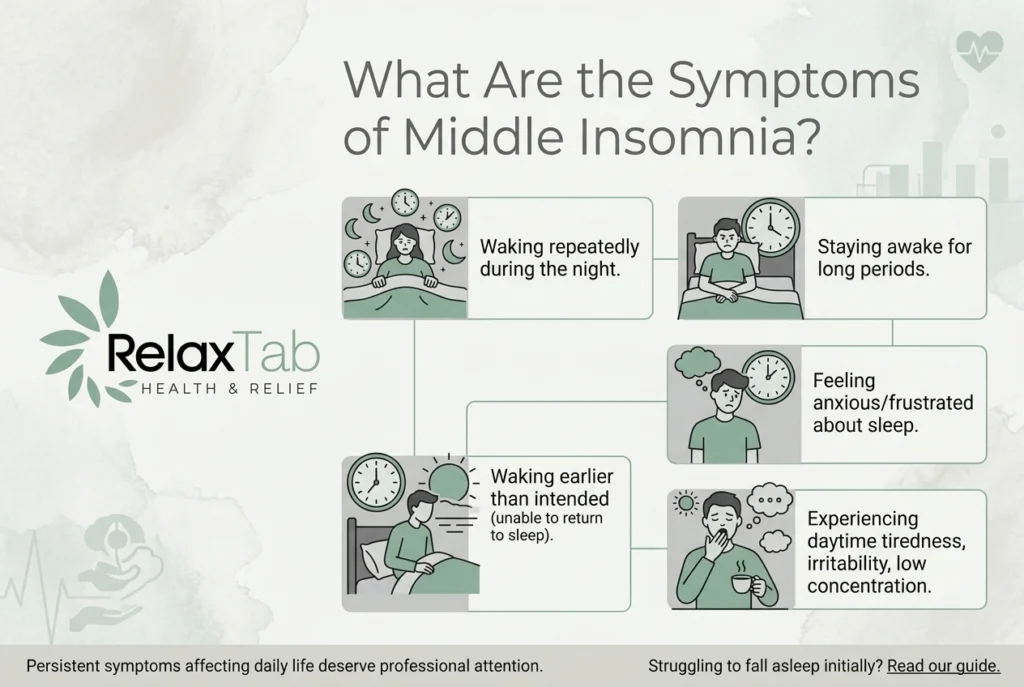
What Are the Symptoms of Middle Insomnia?
Middle insomnia refers to difficulty staying asleep after initially falling asleep. It can affect your energy, concentration, mood, and daily activities.
Common middle insomnia symptoms include:
- Waking repeatedly during the night.
- Staying awake for long periods after waking.
- Feeling anxious or frustrated about sleep.
- Waking earlier than intended and being unable to return to sleep.
- Experiencing daytime tiredness, irritability, or difficulty concentrating.
Occasional disrupted sleep does not necessarily mean you have insomnia. Persistent symptoms that affect everyday life deserve attention.
If you also struggle to fall asleep initially, our guide on why can’t I fall asleep at night? explores possible causes and helpful bedtime habits.
How to Fall Back Asleep at 3am
If you wake up in the middle of the night, try not to turn the experience into a battle. Worrying about how little sleep remains can increase alertness and make returning to sleep more difficult.
Try these practical steps.
1. Stop Checking the Clock
Repeatedly checking the time can create pressure to fall asleep quickly. Turn your clock away and keep your phone out of reach.
2. Practise Slow Breathing
Breathe gently and comfortably, allowing your exhalation to be slightly longer than your inhalation if that feels natural. Relax your shoulders and jaw.
The aim is to reduce tension, not force yourself to sleep.
3. Get Out of Bed if You Remain Awake
If you are becoming frustrated or have been awake for roughly 15–20 minutes, get up and move to a dimly lit room.
Read something calming or listen to quiet audio. Return to bed when you feel sleepy again. Avoid bright screens and stimulating activities.
4. Keep a Consistent Morning Routine
Wake up at approximately the same time every day. Avoid compensating for a difficult night with a very late morning or long daytime nap.
Consistency helps reinforce your body’s sleep-wake rhythm.
5. Make Your Evening More Relaxing
Build a simple wind-down routine around the final 30–60 minutes before bed.
You could take a warm shower, read a book, practise gentle stretching, or write down tomorrow’s tasks to reduce bedtime worrying.
6. Track Your Sleep Patterns
Keep a sleep diary for one or two weeks. Record your bedtime, waking times, caffeine and alcohol intake, medicines, stress levels, and daytime energy.
This information can help you identify patterns and give your GP a clearer picture of your symptoms.
Benefits of Improving Your Sleep Routine
Better sleep habits may help reduce unnecessary awakenings and improve how you feel during the day.
Potential benefits include:
- Improved concentration: More restorative sleep supports attention and everyday functioning.
- Better emotional wellbeing: Consistent sleep can help you manage stress and mood.
- More daytime energy: Sufficient sleep may reduce fatigue and sleepiness.
- A healthier routine: Regular sleep and waking times support your circadian rhythm.
These benefits are not guaranteed overnight. If repeated waking continues despite lifestyle changes, professional assessment may help identify the underlying cause.
Medicines and Sleep Safety
People who experience sleep disruption sometimes consider medicines to help them rest. However, waking at 3am does not automatically mean you need medication.
The correct treatment depends on the cause of your symptoms, your medical history, and any medicines you already take.
Dihydrocodeine Tablets
Dihydrocodeine 30mg tablets contain an opioid painkiller used for certain types of pain. Dihydrocodeine is not a treatment for insomnia and should not be taken to make yourself sleep.
It can cause drowsiness and, in serious cases, slow your breathing.
Lorazepam 2.5mg Tablets
Lorazepam 2.5mg tablets contain a benzodiazepine medicine that may be prescribed for certain anxiety-related conditions. It is not suitable for everyone and can cause sedation, dependence, and withdrawal problems.
Important safety warning: Combining lorazepam with opioid medicines such as dihydrocodeine can cause profound sedation and dangerous breathing difficulties. Do not combine them unless a qualified prescriber has specifically assessed and directed your treatment.
Never start, increase, or stop prescribed medication without appropriate medical advice. Speak to a doctor or pharmacist about possible interactions and safer options for managing your symptoms.
When Should You Seek Medical Advice?
Occasional waking is common, but persistent sleep disruption should not be ignored.
Consider speaking to your GP if:
- You regularly wake at 3am and struggle to return to sleep.
- Poor sleep affects your work, mood, concentration, or relationships.
- You experience ongoing anxiety or low mood.
- You have persistent pain, frequent nighttime urination, or symptoms of a sleep disorder.
- Lifestyle changes have not improved your sleep.
Seek urgent medical help if you experience severe breathing difficulties or another medical emergency.
For ongoing insomnia, a clinician may recommend cognitive behavioural therapy for insomnia (CBT-I), which helps address thoughts and behaviours that interfere with sleep.
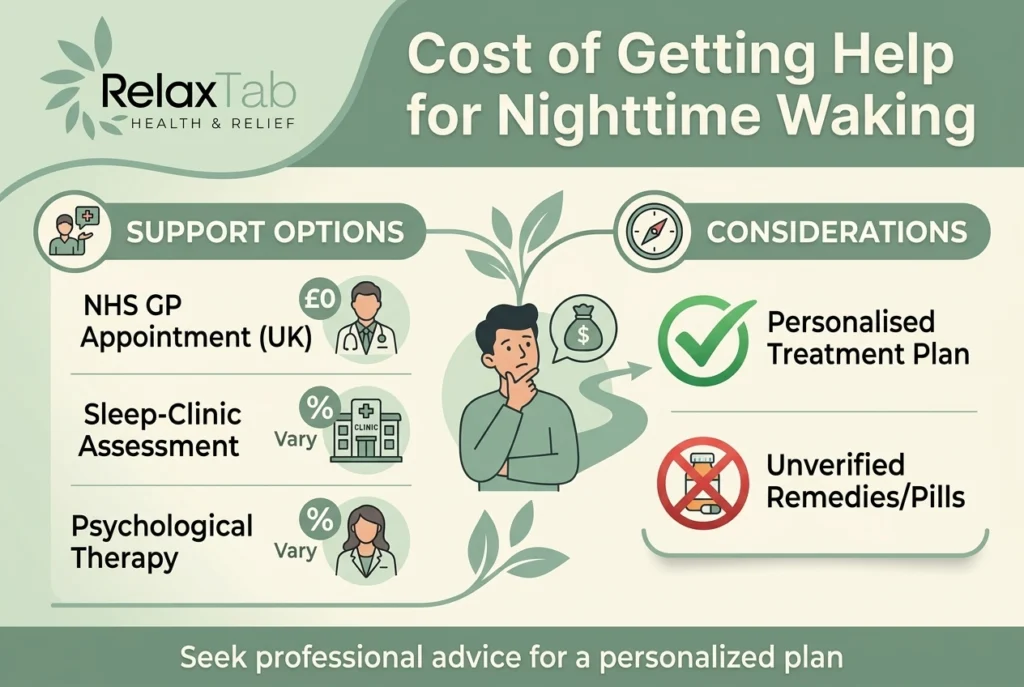
Cost of Getting Help for Nighttime Waking
The cost depends on where you live and the type of support you need.
In the UK, you can generally access NHS GP appointments without paying a consultation fee. Private consultations, sleep-clinic assessments, and psychological therapies may have different costs depending on the provider.
Before paying for sleep products or supplements, consider whether an underlying medical issue needs assessment. A personalised treatment plan may be more useful than repeatedly trying unverified remedies.
Best Practices for Preventing 3am Wake-Ups
Use this checklist to build a more consistent sleep routine:
- Wake up at a consistent time every morning.
- Get natural daylight during the day.
- Limit caffeine later in the day.
- Avoid relying on alcohol to fall asleep.
- Keep your bedroom dark, quiet, and comfortable.
- Create a relaxing bedtime routine.
- Avoid checking the clock when you wake.
- Record persistent sleep problems in a diary.
- Seek professional advice if symptoms continue.
Small, consistent changes are often more useful than trying several new sleep remedies at once.
Conclusion
If you keep asking, “Why do I wake up at 3am every night?”, remember that the time itself is not necessarily the problem. Stress, sleep cycles, evening habits, and underlying health conditions can all contribute.
Start by tracking your sleep, maintaining a consistent routine, and creating a calmer environment. If waking continues or affects your daily life, speak with a healthcare professional rather than self-medicating.
At Relax Tab, we believe informed decisions and reliable health information are important steps towards better wellbeing. Understanding your sleep patterns can help you decide what to try next and when to seek appropriate support.
Medical disclaimer: This article is for general educational purposes and is not a substitute for professional medical advice, diagnosis, or treatment. Always consult a qualified healthcare professional about persistent sleep problems or medication concerns.
Frequently Asked Questions
It can be associated with anxiety, particularly when you wake with racing thoughts or physical tension. However, stress is only one possible explanation. Sleep habits, environmental disturbances, pain, and medical conditions can also cause nighttime waking.
You may be experiencing sleep maintenance insomnia, stress, a disrupted sleep schedule, or another sleep disturbance. Worrying about being awake can also increase alertness. Try a calming activity in dim light and return to bed when sleepy.
Cortisol normally follows a daily rhythm and generally rises towards morning. Stress may influence cortisol regulation, but waking at 3am does not prove you have an abnormal cortisol spike. There are several possible explanations for repeated nighttime waking.
Keep the lights dim, avoid checking your phone, and practise gentle breathing. If you remain awake and frustrated, get out of bed briefly and do something relaxing. Return when sleepy. Avoid trying to force sleep or taking unprescribed medication.
Repeated waking may indicate insomnia when you regularly struggle to stay asleep or return to sleep and experience daytime consequences. Long-term insomnia generally involves symptoms lasting at least three months. A healthcare professional can help assess persistent problems.
Some prescribed medicines may help particular sleep problems, but they are not appropriate for everyone and can have side effects. Treatment should address the underlying cause. Do not use opioid painkillers or another person’s prescription medicine as a sleep aid.
There is no single solution for everyone. Consistent waking times, limiting late caffeine, reducing alcohol, getting daylight, and maintaining a comfortable bedroom are sensible starting points. Persistent symptoms may require professional assessment.
Not necessarily. Sleep naturally changes throughout the night, and the exact time of waking does not have a proven special medical meaning. Focus on how often it happens, how long you remain awake, and whether you feel rested during the day.