
Blog
What Is Anxiety? Symptoms, Causes, Types & Treatment

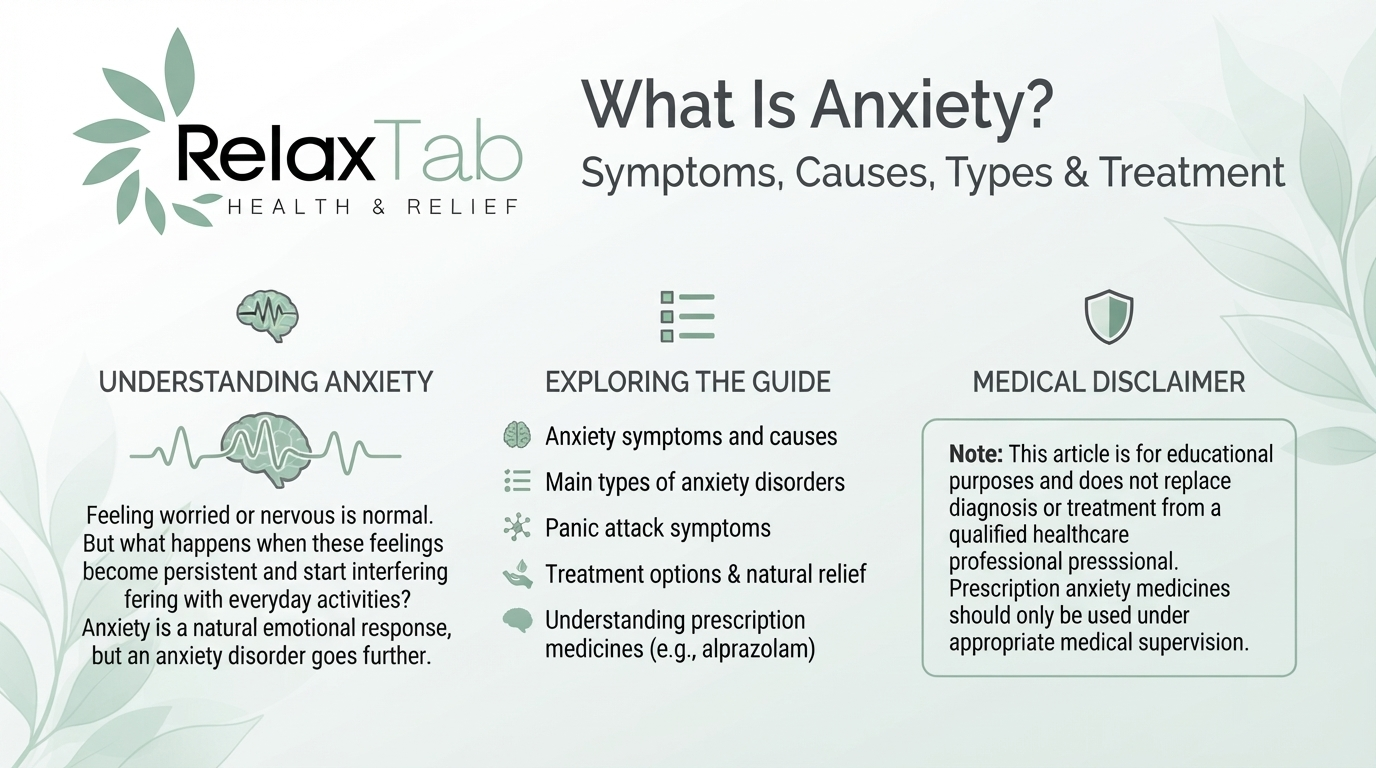
Feeling worried, nervous, restless, or overwhelmed from time to time is a normal part of life. But what is anxiety when these feelings become persistent or start interfering with everyday activities?
Anxiety is a natural emotional response to perceived stress, uncertainty, or danger. An anxiety disorder goes further: worry or fear becomes excessive, difficult to control, persistent, or disruptive to daily life.
In this guide from Relax Tab, we’ll explain anxiety symptoms and causes, the main types of anxiety disorders, anxiety and panic attack symptoms, treatment options, natural ways to manage anxiety, and what to know about prescription medicines such as alprazolam.
Medical note: This article is for educational purposes and does not replace diagnosis or treatment from a qualified healthcare professional. Prescription anxiety medicines should only be used under appropriate medical supervision.
What Is Anxiety?
Anxiety is a feeling of worry, fear, uneasiness, or apprehension that can occur when your brain perceives a threat or stressful situation.
For example, you might feel anxious before an interview, exam, medical appointment, financial decision, or important conversation.
Normal anxiety often decreases when the stressful situation passes. An anxiety disorder is different because symptoms may persist, become difficult to control, or interfere with work, relationships, sleep, or other areas of daily life.
Anxiety vs Stress
| Stress | Anxiety |
| Usually linked to an identifiable external situation | May continue even without an immediate threat |
| Often improves when the situation ends | Can persist or become recurring |
| Can motivate you to respond to a challenge | Can interfere with everyday activities |
| Usually has a clear trigger | May occur with or without an obvious trigger |
Everyone experiences anxiety occasionally. The important question is whether it has become persistent, overwhelming, or disruptive.
Anxiety Symptoms and Causes
Anxiety can affect both the mind and body. Symptoms vary from person to person and may be mild, moderate, or severe.
Common Anxiety Symptoms
Mental and emotional symptoms can include:
- Excessive or persistent worrying
- Feeling restless or constantly “on edge”
- Difficulty concentrating
- Irritability
- Fear that something bad will happen
- Difficulty relaxing
- Trouble controlling worrying thoughts
Physical symptoms may include:
- Muscle tension
- Headaches
- Sweating
- Trembling
- Rapid heartbeat
- Shortness of breath
- Stomach discomfort
- Fatigue
- Sleep difficulties
- Lightheadedness
These symptoms are recognised in clinical descriptions of anxiety disorders, including generalized anxiety disorder.Common Anxiety Symptoms
What Causes Anxiety?
There is rarely one single cause.
Anxiety can develop through a combination of:
- Genetics and family history
- Brain chemistry and biology
- Long-term stress
- Traumatic experiences
- Major life changes
- Certain medical conditions
- Substance or medication effects
- Poor sleep and lifestyle factors
For example, ongoing stress and inadequate sleep may make anxious feelings harder to manage. NIMH notes that genetics, biology, brain chemistry, and environmental factors can all contribute to generalized anxiety disorder.
Signs of an Anxiety Disorder
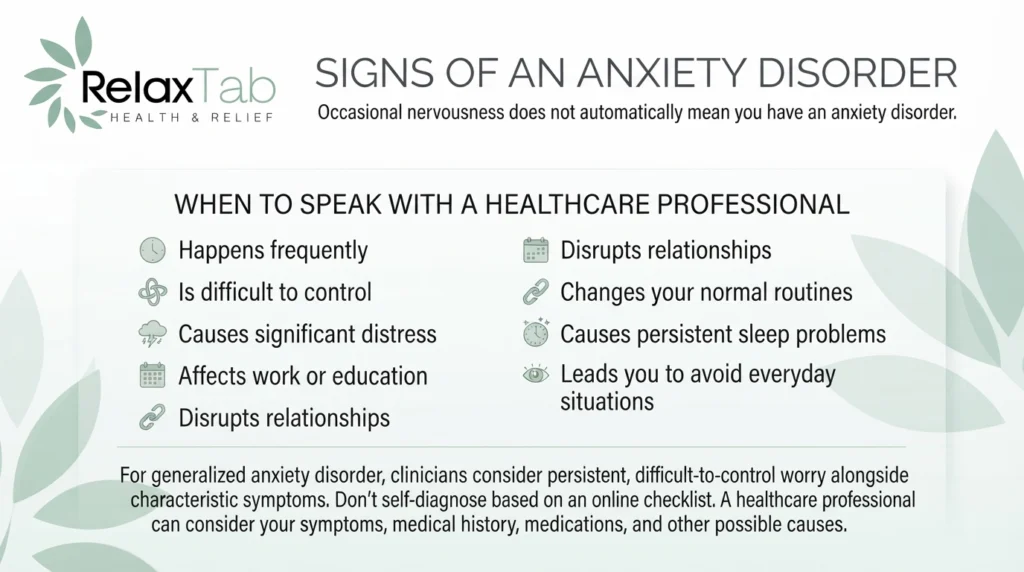
Occasional nervousness does not automatically mean you have an anxiety disorder.
You may want to speak with a healthcare professional if anxiety:
- Happens frequently
- Is difficult to control
- Causes significant distress
- Affects work or education
- Disrupts relationships
- Changes your normal routines
- Causes persistent sleep problems
- Leads you to avoid everyday situations
For generalized anxiety disorder specifically, clinicians consider persistent, difficult-to-control worry alongside characteristic symptoms and the duration and impact of those symptoms.
Don’t self-diagnose based on an online checklist. A healthcare professional can consider your symptoms, medical history, medications, and other possible causes.
Types of Anxiety Disorders
Anxiety disorders are not all the same. The symptoms and triggers can differ significantly.
| Type | What it generally involves |
| Generalized Anxiety Disorder (GAD) | Persistent and excessive worry about everyday areas of life |
| Panic Disorder | Recurrent, unexpected panic attacks and concern about having more |
| Social Anxiety Disorder | Intense fear or anxiety in social or performance situations |
| Specific Phobias | Strong fear related to a particular object or situation |
| Agoraphobia | Fear or avoidance of situations where escape or help may feel difficult |
These are among the anxiety-related conditions recognised by the National Institute of Mental Health.
Generalized Anxiety Disorder
GAD involves excessive worry across multiple areas of life. A person may worry about finances, health, family, work, or everyday responsibilities.
Panic Disorder
Panic disorder involves repeated panic attacks and may cause people to become concerned about future attacks or change their behaviour to avoid them.
Social Anxiety Disorder
Social anxiety involves significant fear or anxiety surrounding social interactions, being observed, or performing in front of others.
Anxiety and Panic Attack Symptoms
A panic attack can feel extremely intense and may happen suddenly.
Common anxiety and panic attack symptoms can include:
- Racing or pounding heartbeat
- Sweating
- Trembling
- Shortness of breath
- Chest discomfort
- Dizziness
- Chills or heat sensations
- Nausea
- Feeling detached or unreal
- Fear of losing control
Not every episode of these symptoms is caused by anxiety. Some physical conditions can produce similar symptoms.
If symptoms such as severe chest pain, significant breathing difficulty, fainting, or other potentially serious symptoms occur, seek urgent medical evaluation rather than assuming they are anxiety
Anxiety Treatment Options
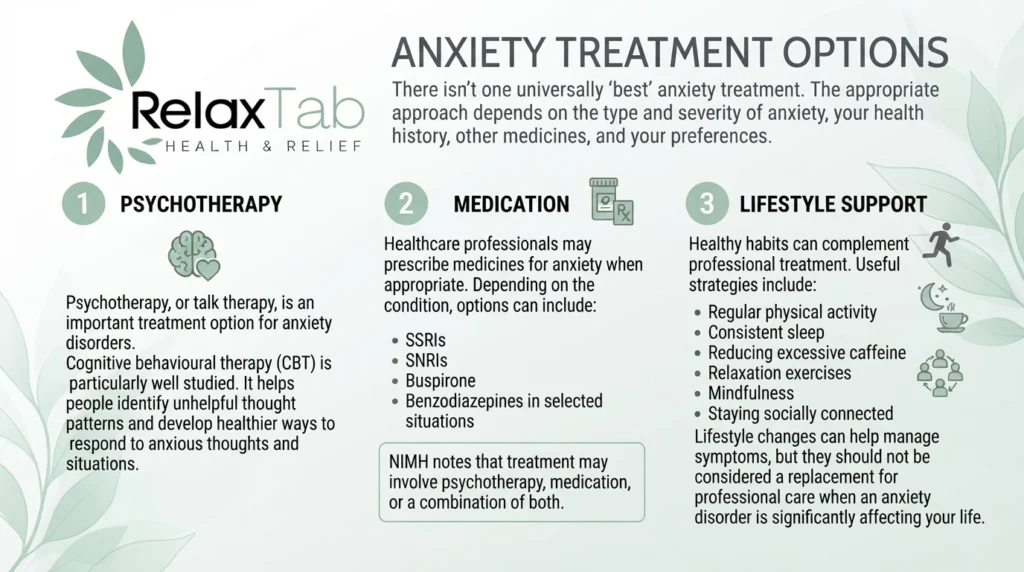
There isn’t one universally “best” anxiety treatment. The appropriate approach depends on the type and severity of anxiety, your health history, other medicines, and your preferences.
Common anxiety treatment options include:
1. Psychotherapy
Psychotherapy, or talk therapy, is an important treatment option for anxiety disorders.
Cognitive behavioural therapy (CBT) is particularly well studied. It helps people identify unhelpful thought patterns and develop healthier ways to respond to anxious thoughts and situations.
2. Medication
Healthcare professionals may prescribe medicines for anxiety when appropriate.
Depending on the condition, options can include:
- SSRIs
- SNRIs
- Buspirone
- Benzodiazepines in selected situations
NIMH notes that treatment may involve psychotherapy, medication, or a combination of both.
3. Lifestyle Support
Healthy habits can complement professional treatment.
Useful strategies include:
- Regular physical activity
- Consistent sleep
- Reducing excessive caffeine
- Relaxation exercises
- Mindfulness
- Staying socially connected
Lifestyle changes can help manage symptoms, but they should not be considered a replacement for professional care when an anxiety disorder is significantly affecting your life.
How to Manage Anxiety Naturally
If you’re searching for how to manage anxiety naturally, start with practical habits rather than looking for an instant cure.
Try these evidence-informed strategies:
1. Improve your sleep routine
Keep consistent sleeping and waking times and create a relaxing bedtime environment. You can also read Relax Tab’s guide to sleep hygiene tips.
2. Move regularly
Walking, exercise, stretching, and other forms of physical activity can support stress management.
3. Watch your caffeine intake
Large amounts of caffeine can worsen feelings such as nervousness, restlessness, and a racing heartbeat in some people.
4. Practise slow breathing
Controlled breathing can help you focus your attention and reduce physical tension during stressful moments.
5. Stay connected
Talking with someone you trust can make stressful experiences easier to manage.
6. Challenge anxious thoughts
Instead of automatically accepting every worrying thought as fact, pause and ask what evidence supports it.
7. Address sleep and pain problems
Physical discomfort and poor sleep can make emotional stress harder to manage. If you’re interested in understanding different types of head pain, see Relax Tab’s guide on migraine vs headache.
Best Medication for Anxiety
There is no single best medication for anxiety for everyone.
Doctors choose treatment according to the specific anxiety disorder, symptom severity, other health conditions, potential interactions, previous treatment response, and individual circumstances.
For longer-term treatment of some anxiety disorders, SSRIs or SNRIs may be considered. Other medicines may be appropriate in specific circumstances. NIMH identifies SSRIs, SNRIs, buspirone, and benzodiazepines among medications that may be used for generalized anxiety disorder.
What About Benzodiazepines?
Benzodiazepines can reduce anxiety relatively quickly, but they require particular caution.
The FDA requires boxed warnings for this medicine class because of risks including misuse, addiction, physical dependence, and withdrawal. Combining benzodiazepines with opioids can also cause severe respiratory depression and other potentially life-threatening effects.
Never start, stop, increase, or decrease a benzodiazepine dose without medical guidance.
Alprazolam 1 mg Tablets and Alprax 2 mg
Alprazolam is a benzodiazepine medication used for certain anxiety and panic disorders. Products containing alprazolam require careful medical oversight because of the potential for misuse, dependence, and withdrawal.
If a healthcare professional has prescribed treatment involving alprazolam, patients should follow the prescribed instructions exactly.
Relax Tab provides information and access to products such as Ksalol Alprazolam 1 mg and Alprax XR 2 mg.
You can also explore the anxiety medication category for related products.
Important: The presence of a product on a pharmacy website does not mean it is appropriate for every person. Prescription medicines should be used only according to the advice of a qualified healthcare professional.
Important Alprazolam Safety Points
- Do not combine it with alcohol.
- Tell your healthcare professional about other medicines you take.
- Be especially cautious with opioid medicines.
- Do not share prescription medication.
- Do not stop regular benzodiazepine treatment abruptly.
- Seek medical help for severe breathing problems, seizures, or other serious reactions.
The FDA specifically warns that abrupt discontinuation or overly rapid dose reduction can cause potentially serious withdrawal reactions.
When Should You Seek Help?
Consider speaking with a doctor, psychologist, psychiatrist, or other qualified healthcare professional when anxiety becomes difficult to manage or starts affecting your everyday life.
Professional support is particularly important when:
- Anxiety is persistent
- Panic attacks keep recurring
- You avoid important activities because of fear
- Sleep is significantly affected
- Work or education is suffering
- Symptoms are becoming more severe
- You are using alcohol or medicines to cope
Getting help early can make it easier to identify the underlying problem and choose an appropriate treatment plan.
Key Takeaways
What is anxiety? It is a normal emotional response to perceived stress or danger, but persistent, excessive, or disruptive anxiety may indicate an anxiety disorder.
The most important points are:
- Anxiety can affect both mental and physical health.
- Several different anxiety disorders exist.
- Panic attacks can cause intense physical symptoms.
- CBT and other forms of psychotherapy can be effective.
- Medication may be appropriate for some people.
- Healthy sleep, exercise, stress management, and reduced caffeine can support symptom management.
- Benzodiazepines such as alprazolam require careful medical supervision.
- There is no universally best medication for anxiety.
- Persistent or disruptive symptoms deserve professional evaluation.
For more health and wellness information, visit the Relax Tab homepage.
FAQs
A: Anxiety is a feeling of worry, fear, nervousness, or uneasiness that often occurs in response to stress or perceived danger. Occasional anxiety is normal, but persistent or excessive anxiety that interferes with daily life may be an anxiety disorder.
A: Common signs include excessive worry, restlessness, irritability, difficulty concentrating, muscle A: tension, sleep problems, sweating, trembling, and feeling constantly on edge. Symptoms vary depending on the specific anxiety disorder.
A: Anxiety can have multiple causes, including genetics, brain biology, stressful environments, traumatic experiences, lifestyle factors, and certain medical or substance-related factors. There is not always one identifiable cause.
A: Yes. Psychotherapy, particularly CBT, can be an effective treatment for several anxiety disorders. Lifestyle strategies such as regular exercise, better sleep, mindfulness, and stress management may also support symptom management.
A: There is no single best medication for everyone. Treatment depends on the type of anxiety, severity, medical history, other medicines, and individual response. A qualified healthcare professional should determine which treatment is appropriate.
A: Alprazolam is a benzodiazepine used for certain anxiety and panic disorders. Because it can cause misuse, dependence, and withdrawal, it should be taken only as directed by a qualified healthcare professional.
A: No. A particular alprazolam product and strength is not automatically appropriate for everyone with anxiety. A healthcare professional must determine whether alprazolam is suitable based on the person’s condition, medical history, other medicines, and risk factors.
A: Yes. Anxiety can make it difficult to fall asleep, stay asleep, or relax at bedtime. Persistent sleep problems can also make anxiety harder to manage, which is why sleep habits can be an important part of an overall care plan.
A: Seek professional help when anxiety persists, becomes difficult to control, causes significant distress, or interferes with work, relationships, education, sleep, or everyday activities. A healthcare professional can assess symptoms and recommend appropriate treatment.