
Blog
How Stress Affects Your Body and Sleep: What to Know


How Stress Affects Your Body and Sleep
Stress is a normal response to challenging situations, but how stress affects your body and sleep becomes important when stress is frequent or long-lasting. Ongoing stress can keep your body in a state of heightened alertness, affect hormones such as cortisol, increase muscle tension, and make it harder to fall or stay asleep.
The good news is that understanding the stress and sleep connection can help you recognise warning signs and build healthier habits. In this guide, Relax Tab explains the effects of stress on the body, how stress causes sleep problems, the role of cortisol, chronic stress symptoms, and practical ways to sleep better.
What Is Stress?
Stress is the body’s physical and emotional response to a challenge, demand, or perceived threat.
Short-term stress can be useful. It can increase alertness and help you respond quickly when something requires your attention.
Problems can arise when the stress response stays activated for too long.
Stress may come from:
- Work or academic pressure
- Financial concerns
- Relationship difficulties
- Major life changes
- Family responsibilities
- Health concerns
- Lack of sleep
- Ongoing uncertainty
Not everyone responds to stress in the same way. The intensity, duration, and source of stress all matter.
Effects of Stress on the Body
The effects of stress on the body can involve multiple systems because the stress response prepares you to respond to a perceived challenge.
Short-term stress may temporarily increase heart rate, breathing rate, muscle tension, and alertness.
When stress becomes persistent, people may notice a wider range of physical and emotional symptoms.
Physical Effects of Stress
Chronic or frequent stress may be associated with:
- Muscle tension
- Headaches
- Fatigue
- Digestive discomfort
- Changes in appetite
- Difficulty concentrating
- Restlessness
- Irritability
- Changes in sleep
- Increased feelings of worry
Stress can also affect behaviours that influence health, such as physical activity, eating patterns, caffeine use, and sleep schedules.
Important: Stress symptoms can overlap with symptoms of other health conditions. Persistent, severe, or unexplained physical symptoms should be assessed by a qualified healthcare professional.
Chronic Stress Symptoms
Chronic stress refers to stress that continues over an extended period rather than resolving after a short-term challenge.
Common chronic stress symptoms can include:
Emotional Symptoms
- Feeling constantly overwhelmed
- Irritability
- Difficulty relaxing
- Persistent worrying
- Low motivation
- Feeling mentally exhausted
Physical Symptoms
- Frequent headaches
- Muscle tightness
- Fatigue
- Digestive issues
- Changes in sleep
- Racing heartbeat during stressful moments
Behavioural Changes
Some people under prolonged stress may also:
- Avoid social activities
- Exercise less
- Eat differently
- Consume more caffeine
- Struggle to maintain routines
- Spend more time worrying at night
Recognising these patterns early can make it easier to address the underlying stress.
Fight or Flight Response and Sleep
The fight or flight response is the body’s rapid response to a perceived threat.
When your brain detects danger, your body can increase alertness and prepare you to act. This response is useful when you need to react quickly, but it is not ideal when you’re trying to sleep.
At bedtime, continued mental or physical arousal may make it harder to transition into a relaxed state.
You may notice:
- Racing thoughts
- Muscle tension
- Increased alertness
- Restlessness
- Difficulty switching off
- Frequent waking
This explains an important part of the fight or flight response and sleep relationship.
Cortisol and Sleep Quality
Cortisol is a hormone involved in the body’s stress response and daily rhythm.
Normally, cortisol follows a pattern across the day, helping support alertness during waking hours. Sleep and the body’s internal clock are closely connected with hormonal rhythms.
Stress can affect this system, particularly when stress becomes persistent.
How Does Cortisol Affect Sleep?
The relationship between cortisol and sleep quality is complex.
Persistent psychological stress can be associated with changes in stress-hormone activity and increased arousal, which may make it harder to relax at bedtime.
However, cortisol isn’t simply a “bad” sleep hormone. Your body needs cortisol for normal physiological functions.
The goal isn’t to eliminate cortisol. Instead, healthy routines can help support normal sleep-wake patterns.
How Stress Causes Sleep Problems
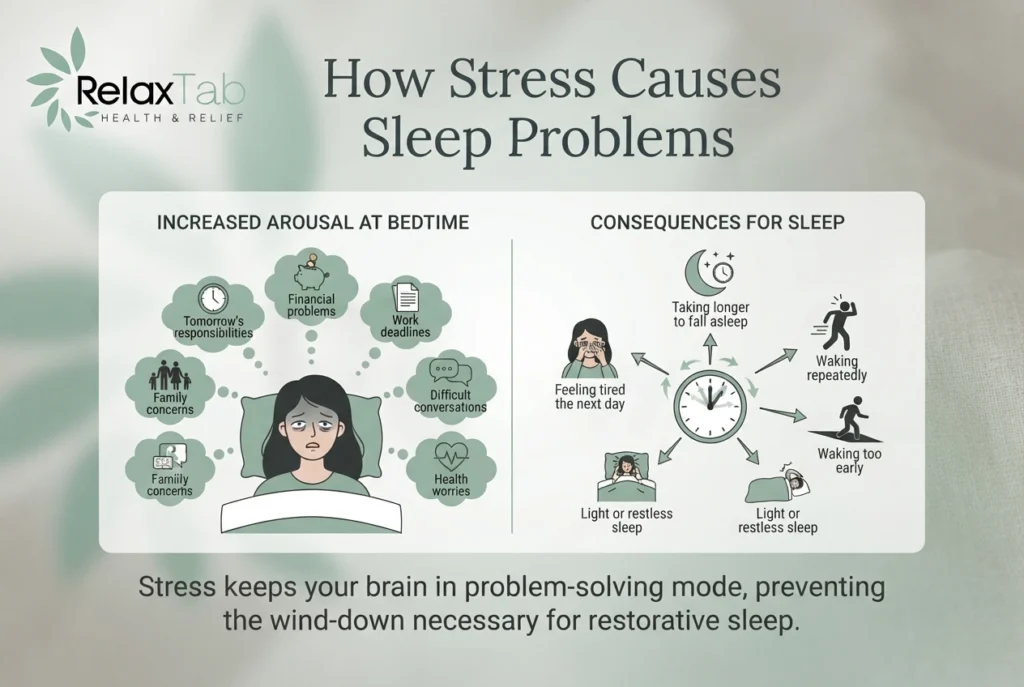
So, how stress causes sleep problems comes down largely to increased mental and physical arousal.
A stressful day may follow you into the bedroom.
You might start thinking about:
- Tomorrow’s responsibilities
- Financial problems
- Work deadlines
- Family concerns
- Difficult conversations
- Health worries
Instead of preparing for sleep, your brain remains focused on solving problems.
This can lead to:
- Taking longer to fall asleep
- Waking repeatedly
- Waking too early
- Light or restless sleep
- Feeling tired the next day
The Stress and Sleep Connection
The stress and sleep connection works in both directions.
Think of it as a cycle:
Stress → heightened alertness → difficulty sleeping → daytime fatigue → reduced ability to cope with stress → more stress
Poor sleep doesn’t automatically mean you have a sleep disorder, but repeated sleep disruption can make daily stress more difficult to handle.
If anxiety is also part of the picture, read our guide on Can Anxiety Affect Sleep, which explores the relationship between anxiety, insomnia, and nighttime worry.
You can also learn more about anxiety in our guide to What Is Anxiety?.
How to Reduce Stress for Better Sleep
If you’re wondering how to reduce stress for better sleep, focus on simple habits that you can maintain consistently.
1. Keep a Consistent Sleep Schedule
Try to go to bed and wake up at approximately the same time each day.
A regular schedule can help support your body’s sleep-wake rhythm.
2. Create a Wind-Down Period
Give yourself some time before bed to transition away from work and stimulating activities.
Try:
- Reading
- Gentle stretching
- Relaxation exercises
- Slow breathing
- Taking a warm shower
- Listening to calm music
3. Write Down Tomorrow’s Tasks
If your mind becomes busy at night, write down the things you need to handle the next day.
This can give your brain a clear place to “park” unfinished tasks.
4. Reduce Caffeine Later in the Day
Caffeine can interfere with sleep in some people, especially when consumed later in the day.
If you are sensitive to caffeine, consider reducing afternoon and evening intake.
5. Stay Physically Active
Regular physical activity can support both stress management and healthy sleep.
Even a daily walk can be a practical starting point.
6. Make Your Bedroom Sleep-Friendly
Keep the bedroom comfortable, dark, quiet, and suitable for sleep.
7. Don’t Try to Solve Everything at Bedtime
One of the most useful habits is separating rest time from problem-solving time.
If something cannot be solved at 1 a.m., remind yourself that it can be addressed tomorrow.
Stress, Sleep Medicines and Wakefulness Medicines
Persistent sleep problems sometimes lead people to search for medicines online.
However, medication should not be chosen simply because stress is making it difficult to sleep.
The underlying problem matters.
For example, someone experiencing insomnia may need assessment for stress, anxiety, depression, medication effects, sleep disorders, or other medical factors.
Relax Tab provides information and access to products in areas such as sleeping pills.
Prescription medicines should be used according to the directions of a qualified healthcare professional.
Armodafinil 150 mg Tablets
Armodafinil is a wakefulness-promoting medicine used for certain sleep-related disorders. It is not a treatment for ordinary stress or a general solution for being tired after poor sleep.
Relax Tab lists Armodafinil 150 mg Tablets as a product.
Because armodafinil affects wakefulness, it should be used only when medically appropriate and according to professional guidance.
If you’re experiencing fatigue because of chronic stress or insufficient sleep, treating the underlying cause is more appropriate than simply trying to counteract tiredness with a wakefulness-promoting medicine.
Zolpidem 10 mg Tablets
Zolpidem is a prescription sleep medicine used for certain forms of insomnia.
Relax Tab provides information about Zolpidem 10 mg Tablets.
Zolpidem is not designed to treat the underlying cause of chronic stress.
Important considerations include:
- Use only as prescribed.
- Don’t increase the dose without medical advice.
- Avoid combining it with alcohol.
- Tell your healthcare professional about other medicines you use.
- Discuss persistent insomnia rather than repeatedly self-treating it.
The U.S. Food and Drug Administration has also issued safety information concerning complex sleep behaviours associated with certain prescription insomnia medicines, including zolpidem.
For medication-specific questions, speak with a doctor or pharmacist.
What Is the Cost of Treating Stress-Related Sleep Problems?
There is no single cost of stress or sleep treatment because expenses depend on the cause, location, healthcare provider, treatment approach, and whether medication is required.
Self-care strategies such as improving sleep routines, exercising, and practising relaxation may cost little or nothing.
Professional therapy, medical consultations, sleep assessments, and prescription medicines can involve additional costs.
Rather than choosing treatment based only on price, focus on identifying the cause of persistent symptoms.
Best Practices for Managing Stress and Sleep
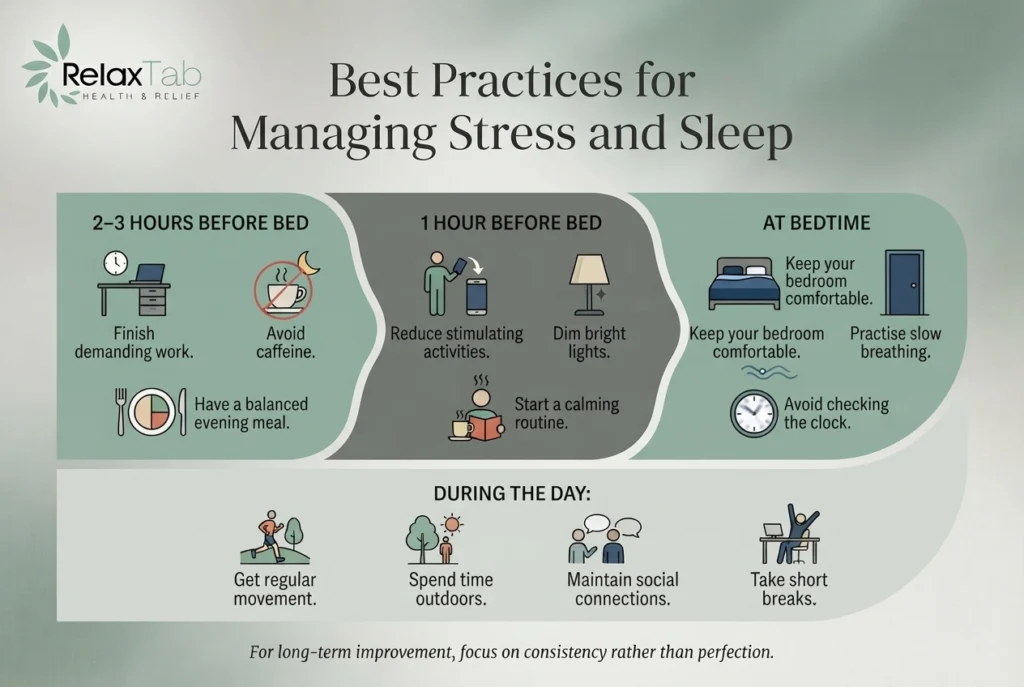
For long-term improvement, focus on consistency rather than perfection.
A practical evening routine
2–3 hours before bed:
- Finish demanding work where possible.
- Avoid excessive caffeine.
- Have a balanced evening meal.
1 hour before bed:
- Reduce stimulating activities.
- Dim bright lights.
- Start a calming routine.
At bedtime:
- Keep your bedroom comfortable.
- Practise slow breathing.
- Avoid repeatedly checking the clock.
During the day:
- Get regular movement.
- Spend time outdoors when possible.
- Maintain social connections.
- Take short breaks during stressful periods.
When Should You Seek Professional Help?
Stress is common, but persistent symptoms shouldn’t simply be ignored.
Consider speaking with a healthcare professional if:
- Sleep problems continue for several weeks.
- Stress is interfering with work or relationships.
- You feel exhausted most days.
- Anxiety or low mood is becoming difficult to manage.
- You rely on medicines or alcohol to sleep.
- Physical symptoms are persistent or unexplained.
If you experience severe chest pain, significant breathing difficulty, fainting, confusion, or another emergency symptom, seek urgent medical care rather than assuming stress is responsible.
Key Takeaways
How stress affects your body and sleep depends on its intensity, duration, and how your body responds.
The most important points are:
- Short-term stress can temporarily increase alertness.
- Chronic stress can contribute to physical, emotional, and behavioural symptoms.
- The fight-or-flight response can make relaxation and sleep more difficult.
- Stress can affect sleep through increased mental and physical arousal.
- Cortisol is part of the body’s normal stress and sleep-wake systems.
- Poor sleep can make stress harder to manage.
- Consistent sleep habits, physical activity, relaxation, and stress-management strategies can help.
- Prescription medicines such as zolpidem or armodafinil should only be used when medically appropriate and according to professional advice.
For more health and wellness resources, visit the Relax Tab homepage.
FAQs
A: Stress activates systems that increase alertness and prepare the body to respond to challenges. When stress persists into the evening, increased mental and physical arousal can make it harder to relax and sleep. Repeated poor sleep can then increase fatigue and make everyday stress more difficult to manage.
A: Yes. Chronic stress can contribute to insomnia by keeping the mind and body in a heightened state of alertness. Worrying thoughts, muscle tension, changes in routine, and concern about sleep itself can make falling asleep or staying asleep more difficult.
A: Common symptoms include persistent worry, irritability, fatigue, headaches, muscle tension, difficulty concentrating, digestive discomfort, changes in appetite, restlessness, and sleep problems. Symptoms vary from person to person, and persistent symptoms may have causes other than stress.
A: Cortisol is a normal hormone involved in stress regulation and the body’s daily sleep-wake rhythm. Ongoing stress may be associated with changes in cortisol activity and increased arousal, which can interfere with relaxation and sleep. Cortisol itself is not inherently harmful; healthy levels and timing are important.
A: The fight-or-flight response is the body’s rapid reaction to a perceived threat. It increases alertness and prepares you to respond. When this state remains activated near bedtime because of ongoing stress, it can make relaxation and sleep more difficult.
A: Maintain a consistent sleep schedule, create a relaxing bedtime routine, exercise regularly, limit caffeine later in the day, write down worries before bed, and make your bedroom comfortable for sleep. If stress or insomnia persists, professional support may be helpful.
A: Yes. Stress can contribute to nighttime awakenings by keeping the brain alert or triggering worrying thoughts. If you repeatedly wake up and struggle to return to sleep, consider whether stress, anxiety, your sleep environment, medicines, or another health issue could be contributing.
A: Yes. Stress can be associated with symptoms such as muscle tension, headaches, fatigue, digestive discomfort, restlessness, and changes in sleep. However, physical symptoms should not automatically be attributed to stress because other medical conditions can produce similar symptoms.
A: Zolpidem is a prescription sleep medicine used for certain types of insomnia; it does not treat the underlying causes of chronic stress. Anyone considering zolpidem should discuss their sleep problem and medical history with a qualified healthcare professional.
A: No. Armodafinil is a wakefulness-promoting medicine used for specific sleep-related disorders. It isn’t a general treatment for stress or ordinary tiredness. If fatigue results from chronic stress or insufficient sleep, identifying and addressing the underlying cause is important.