
Blog
Why Do I Wake Up With a Headache? 7 Common Causes

Waking up with a headache can make it difficult to start your day, especially when you have had a full night’s sleep. If you regularly experience morning headaches, you might wonder whether dehydration, poor sleep or an underlying health condition is responsible.
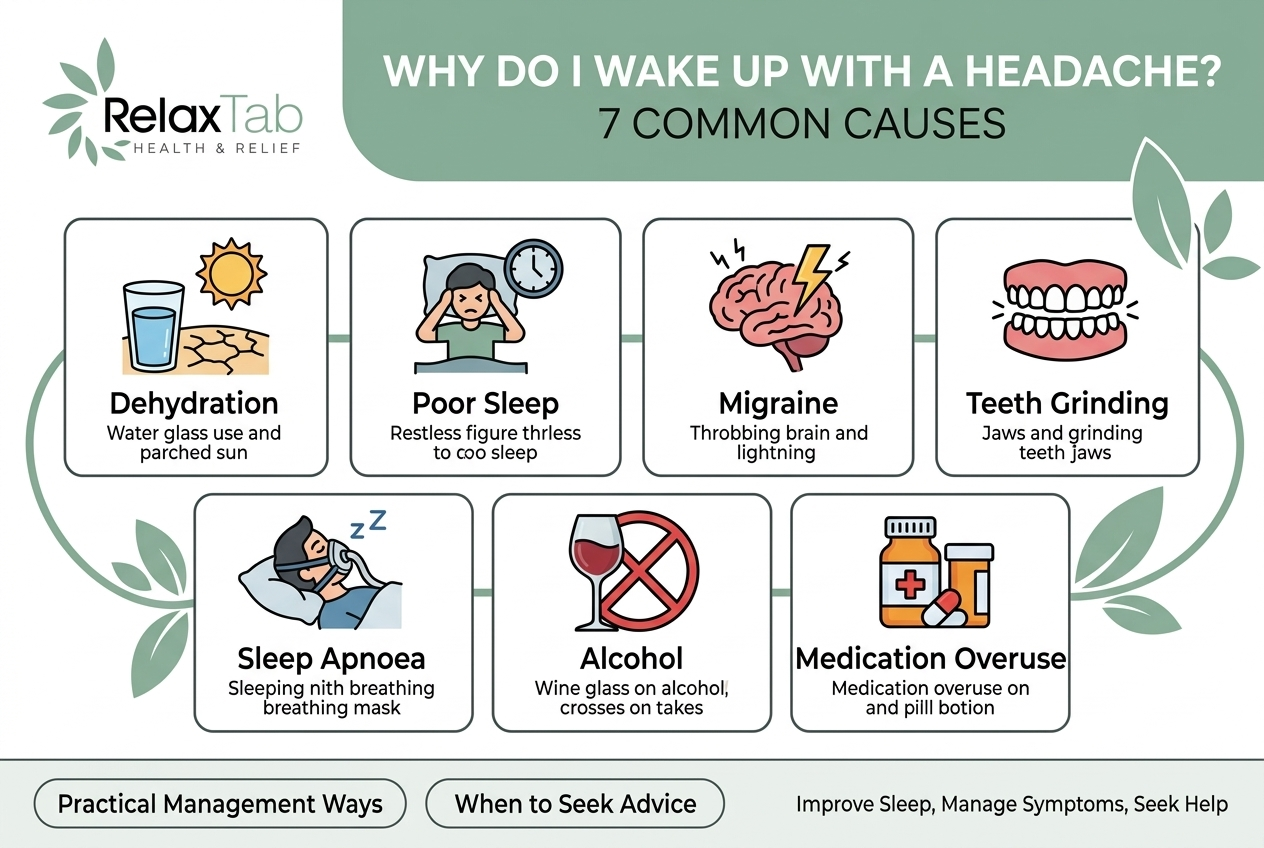
Morning headaches can be caused by dehydration, poor sleep, migraine, teeth grinding, sleep apnoea, alcohol or medication overuse. The right explanation depends on your symptoms, sleep habits and how often the pain occurs.
The good news is that many morning headaches improve with simple lifestyle changes. However, recurring headaches deserve attention because they can sometimes indicate a condition that needs medical treatment.
In this guide, Relax Tab explores common morning headache causes, practical ways to manage them and when to seek professional medical advice.
What Are Morning Headaches?
Morning headaches are headaches that develop during sleep or are present when you wake up. They may feel like pressure around your forehead, a dull ache across your head or throbbing pain accompanied by nausea or sensitivity to light.
Some headaches disappear shortly after waking, while others continue for several hours.
Occasional morning headaches are not always a sign of a serious problem. However, waking up with a headache every morning may indicate disrupted sleep, migraine, teeth grinding or another condition that needs assessment.
Why Do I Wake Up With a Headache? Seven Common Causes
Understanding the possible triggers can help you identify patterns and decide what to do next.
1. Dehydration
A dehydration headache in the morning can occur when you have not consumed enough fluids, particularly after sweating, exercising, drinking alcohol or experiencing vomiting or diarrhoea.
Dehydration may cause a dull headache alongside thirst, a dry mouth, dark urine and dizziness.
What can help?
- Drink water regularly throughout the day.
- Have a glass of water when you wake up.
- Replace fluids lost through sweating or illness as appropriate.
- Limit alcohol, which can contribute to dehydration and disrupt sleep.
Drinking enough water may help if dehydration is responsible, but persistent headaches should not automatically be attributed to a lack of fluids.
2. Sleep Apnoea and Morning Headaches
Sleep apnoea is a condition in which breathing repeatedly stops and starts during sleep. Obstructive sleep apnoea occurs when the upper airway becomes too narrow or temporarily closes.
These interruptions can disturb sleep and contribute to morning headaches, daytime tiredness and difficulty concentrating.
Possible warning signs include:
- Loud, persistent snoring.
- Gasping or choking during sleep.
- Breathing pauses noticed by another person.
- Waking up feeling unrefreshed.
- Excessive daytime sleepiness.
If these symptoms sound familiar, arrange a GP appointment. A sleep assessment may be needed to confirm the cause.
Read the NHS guide to sleep apnoea for more information.
3. Teeth Grinding During Sleep
Teeth grinding, also called bruxism, involves clenching or grinding your teeth, often without realising it.
A teeth-grinding headache in the morning may feel like pressure around the temples. You might also notice jaw stiffness, facial discomfort, tooth sensitivity or pain when chewing.
Stress, certain medicines and sleep-related problems can contribute to teeth grinding.
What can help?
- Speak to a dentist if you regularly wake with jaw pain.
- Practise relaxation techniques before bedtime.
- Avoid excessive caffeine and alcohol, particularly in the evening.
- Ask your dentist whether a mouthguard could help protect your teeth.
Frequent morning headaches accompanied by jaw discomfort are worth investigating rather than treating as ordinary headaches.
4. Poor Sleep and Irregular Sleep Patterns
Not getting enough sleep, waking repeatedly during the night or frequently changing your bedtime can contribute to headaches.
Sleeping much longer than usual can also trigger headaches in some people. Stress and insomnia may further affect sleep quality.
If you struggle to fall asleep, explore these Relax Tab resources:
These guides explain sleep-related habits and problems that may affect your rest.
5. Migraine
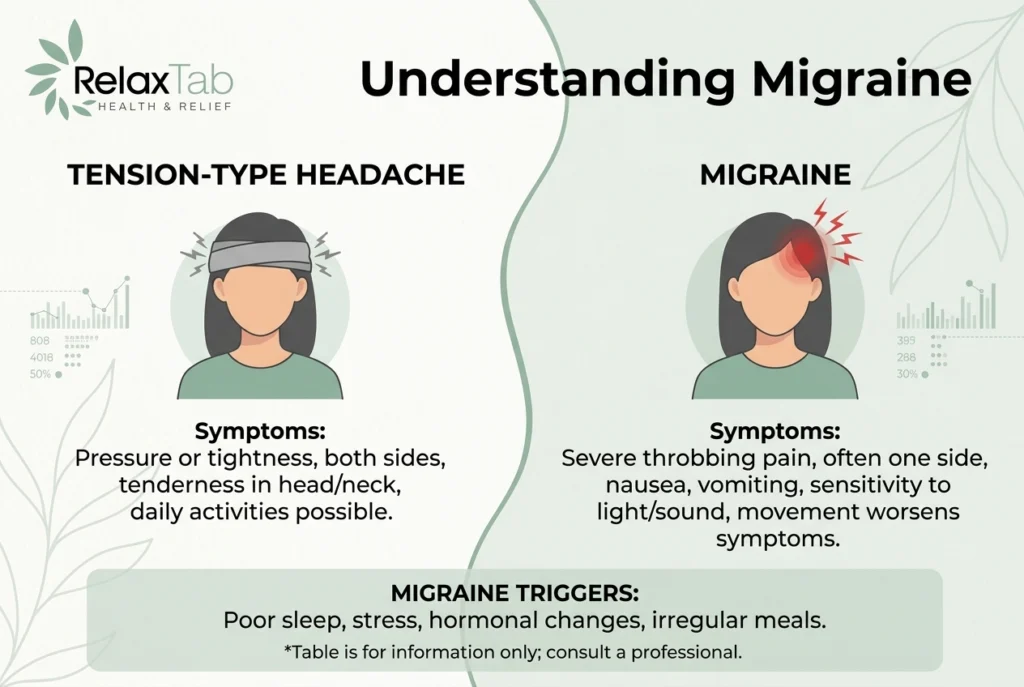
Migraine can cause moderate to severe throbbing pain, often on one side of the head. Some people also experience nausea, vomiting or sensitivity to light and sound.
Migraine attacks may begin overnight or be present when you wake up. Poor sleep, stress, hormonal changes and irregular meals can trigger attacks in some people.
| Feature | Tension-type headache | Migraine |
| Pain | Pressure or tightness | Often throbbing |
| Location | Usually both sides | Often one side, but can affect both |
| Other symptoms | Tenderness around the head or neck | Nausea and sensitivity to light or sound |
| Daily activities | Often possible, although uncomfortable | Movement may make symptoms worse |
Symptoms vary, so this table cannot diagnose the type of headache you have.
Read our guide to Migraine vs Headache to understand the differences.
6. Alcohol, Caffeine and Skipped Meals
Alcohol can disrupt sleep and contribute to dehydration, making a headache more likely the following morning.
Meanwhile, suddenly reducing your usual caffeine intake can trigger withdrawal headaches. Skipping meals or going a long time without eating may also contribute.
To reduce these triggers:
- Eat meals at reasonably consistent times.
- Drink water throughout the day.
- Keep caffeine intake consistent and reduce it gradually if needed.
- Avoid alcohol close to bedtime, particularly if it affects your sleep.
7. Medication Overuse and Other Health Problems
Regularly taking certain headache medicines can sometimes lead to medication-overuse headaches. These may become frequent and create a cycle in which headaches return as the medicine wears off.
Morning headaches can also be associated with sinus problems, medication side effects and other medical conditions.
If you regularly need pain relief, speak to a pharmacist or GP about the frequency of use and whether your treatment needs reviewing.
How to Tell What Is Causing Your Morning Headache
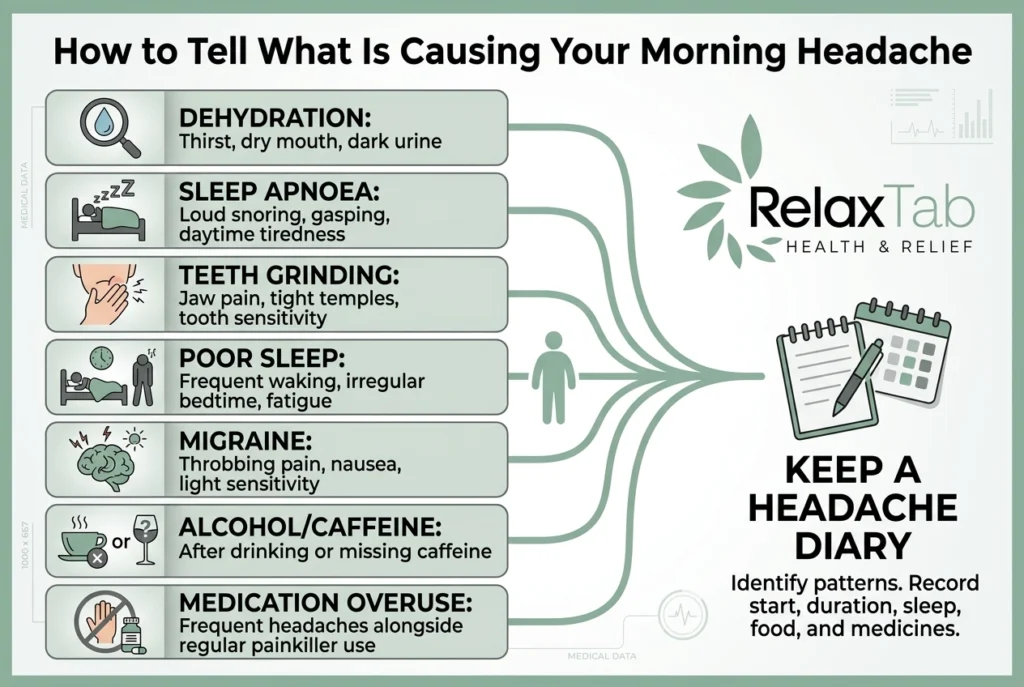
The timing, location and accompanying symptoms can provide useful clues, although they cannot confirm a diagnosis.
| Possible cause | Clues to look for |
| Dehydration | Thirst, dry mouth, dark urine |
| Sleep apnoea | Loud snoring, gasping, daytime tiredness |
| Teeth grinding | Jaw pain, tight temples, tooth sensitivity |
| Poor sleep | Frequent waking, irregular bedtime, fatigue |
| Migraine | Throbbing pain, nausea, light sensitivity |
| Alcohol or caffeine changes | Symptoms after drinking or missing usual caffeine |
| Medication overuse | Frequent headaches alongside regular painkiller use |
Keeping a headache diary can help you identify patterns. Record when the headache begins, how long it lasts, your sleep quality, food and fluid intake, and any medicines you take.
How to Stop Morning Headaches
The best way to prevent morning headaches is to address the underlying cause rather than repeatedly treating the pain.
Try these practical steps:
- Maintain a consistent sleep schedule. Go to bed and wake up at similar times every day.
- Stay hydrated. Drink water regularly rather than waiting until you feel thirsty.
- Eat regular meals. Avoid skipping meals if this tends to trigger your headaches.
- Reduce evening alcohol. Alcohol can interfere with sleep and contribute to headaches.
- Create a relaxing bedtime routine. Reduce late-night screen use and try gentle breathing exercises.
- Review your sleep environment. Choose a comfortable pillow and mattress that support your neck.
- Seek advice about recurring symptoms. A GP or pharmacist can help you decide whether further assessment or treatment is needed.
For occasional headaches, rest, fluids and avoiding known triggers may help. If you are considering pain relief, check that it is suitable for you and follow the product instructions or advice from a healthcare professional.
You can also explore the Relax Tab pain relief category for information about pain-relief products. Choosing a medicine should depend on its ingredients, your medical history and professional advice—not simply on where the pain occurs.
What Is the Connection Between Headache Medicines and Sleep?
Some medicines treat pain, while others are prescribed for specific sleep problems. They are not interchangeable, and sleeping tablets should not be used simply to prevent morning headaches.
What Are Soma Pain Tablets Used For?
Soma Pain 30/500 mg tablets are a specific medicine product. Before using them, check the active ingredients, approved indication, warnings and directions supplied with the medicine, and ask a pharmacist or prescriber if anything is unclear.
Do not assume that a medicine is suitable for a morning headache because its name includes the word “pain”. It may not be appropriate for your symptoms, and some medicines can cause side effects or interact with other treatments.
Read the Soma Pain 30/500 mg tablets product page for product-specific information. Use the medicine only when appropriately prescribed or otherwise authorised for you.
What Is Temazepam Used For?
Temazepam is a benzodiazepine medicine prescribed for short-term treatment of severe insomnia in certain circumstances. It is not a treatment for the underlying causes of morning headaches.
Temazepam can cause drowsiness, impaired coordination and dependence. It can also be dangerous when combined with alcohol, opioids or other medicines that cause sedation.
People with suspected sleep apnoea should seek medical advice before using sedative medicines, as these may worsen breathing problems during sleep.
You can read the Temazepam 20 mg tablet product page for product information. Only use temazepam if it has been prescribed for you and follow your prescriber’s instructions.
When to See a Doctor for Morning Headaches
Arrange a GP appointment if you regularly wake with headaches, the pain is becoming more frequent, or headaches interfere with your sleep and daily activities.
Seek urgent medical advice through NHS 111 or an appropriate urgent-care service if a headache comes with new vision problems, repeated vomiting, or pain triggered by coughing, straining or bending.
Call 999 or go to A&E for a sudden, extremely severe headache, or a headache accompanied by new weakness, numbness, confusion, difficulty speaking, a seizure or loss of vision. A severe headache with a stiff neck and high fever also needs emergency assessment.
For more guidance, consult the NHS headache advice page.
Conclusion
If you are asking, “Why do I wake up with a headache?”, the answer may involve dehydration, poor sleep, migraine, teeth grinding or a sleep-related condition such as sleep apnoea.
Simple changes to your daily routine may help prevent occasional headaches, but recurring symptoms should not be ignored. Pay attention to accompanying symptoms, keep a headache diary and seek medical advice when necessary.
At Relax Tab, we encourage informed decisions about pain relief and sleep health. Understanding the cause of your headache is an important first step towards finding appropriate treatment.
Medical disclaimer: This article is for general information and does not replace individual medical advice, diagnosis or treatment. Medicine suitability depends on your circumstances and should be discussed with a qualified healthcare professional.
Frequently Asked Questions
A: Repeated morning headaches can be linked to sleep apnoea, migraine, teeth grinding, dehydration, poor sleep or medication overuse. Keep a record of your symptoms and arrange a GP appointment if the headaches occur regularly or are getting worse.
A: It can be. Morning headaches may occur alongside loud snoring, breathing pauses during sleep and excessive daytime tiredness. These symptoms do not confirm sleep apnoea, but they are good reasons to seek a medical assessment.
A: Yes. Not drinking enough fluids during the day, alcohol consumption or fluid loss from illness can contribute to headaches. Drinking water may help if dehydration is responsible, but persistent symptoms need further assessment.
A: Try maintaining a regular sleep schedule, drinking enough water, eating regular meals, limiting alcohol and identifying personal triggers. If headaches keep returning despite these changes, consult a healthcare professional instead of relying on home remedies alone.
A: A hypnic headache is a rare primary headache disorder that repeatedly wakes a person from sleep, usually at a similar time. It is more common in older adults. A clinician should assess recurring sleep-related headaches to rule out other causes before making this diagnosis.
A: Some medicines can cause headaches or leave you feeling drowsy the following morning. Sedative medicines can also interact with alcohol and other drugs. Do not start, stop or change prescribed sleeping medication without discussing it with your prescriber.
A: Seek emergency care for a sudden, extremely severe headache or one accompanied by weakness, confusion, seizures or loss of vision. Arrange a medical review for frequent, worsening or unexplained headaches.