
Blog
Muscle Pain vs Nerve Pain: Symptoms, Causes and Treatment

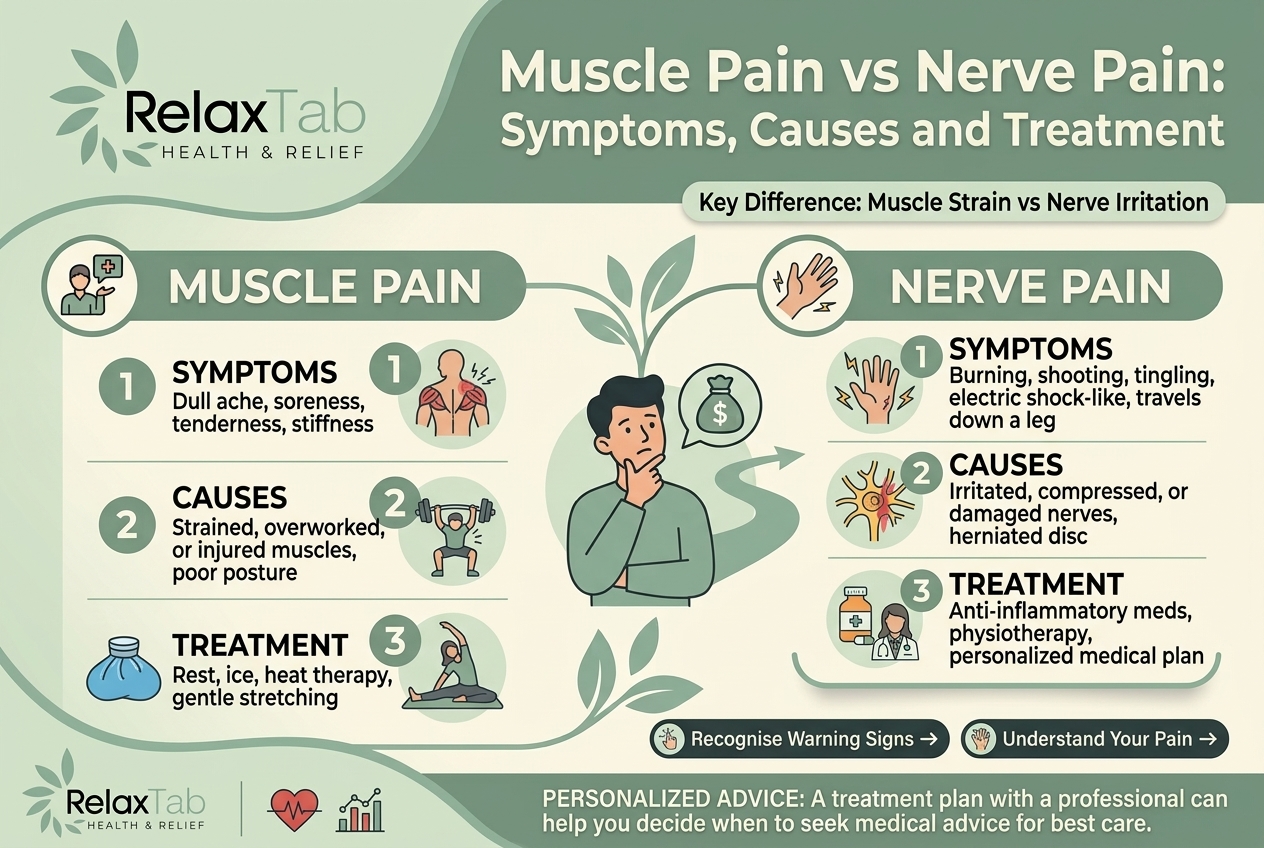
Have you ever experienced a dull ache after exercise or a sudden, burning pain that travels down your leg? Understanding the difference between muscle pain vs nerve pain can help you recognise possible causes and decide when to seek medical advice.
The key difference is that muscle pain usually comes from strained, overworked or injured muscles, while nerve pain results from irritated, compressed or damaged nerves. Muscle pain often feels sore or tender, whereas nerve pain may feel burning, shooting, tingling or electric shock-like. However, symptoms can overlap, so they cannot confirm a diagnosis on their own.
In this guide, Relax Tab explains common symptoms, causes, treatment options and warning signs to help you understand your pain and make informed decisions about your health.
What Is Muscle Pain?
Muscle pain, medically known as myalgia, is discomfort that develops in muscles or the surrounding soft tissues. It can affect one area, such as your shoulder, or several parts of your body.
Common causes include exercise, lifting heavy objects, poor posture, muscle strain and physical injury. Some infections and medical conditions can also cause widespread muscle aches.
Common muscle pain symptoms
Muscle pain may cause:
- Dull, aching or throbbing discomfort.
- Tenderness when pressing the affected area.
- Stiffness or reduced movement.
- Pain when stretching or contracting a muscle.
- Swelling or bruising after an injury.
- Discomfort that worsens with certain movements.
For example, if your back feels sore after lifting a heavy box, you may have strained a muscle. The discomfort often stays around the affected area, although it can spread to nearby tissues.
What helps muscle pain?
Depending on the cause, mild muscle pain may improve with relative rest, gentle movement and a cold pack wrapped in a towel after an acute injury. Heat may help relieve some types of stiffness.
Avoid activities that worsen the pain, and seek medical advice if symptoms are severe, persistent or accompanied by unusual symptoms.
What Is Nerve Pain?
Nerve pain, also called neuropathic pain, occurs when the nerves or the nervous system are damaged or affected by disease. Unlike typical muscle soreness, it can cause unusual sensations even when the affected area is not being touched.
Common nerve pain symptoms
The most recognisable nerve pain symptoms include:
- Burning or hot sensations.
- Sharp, shooting or stabbing pain.
- Electric shock-like discomfort.
- Tingling or pins and needles.
- Numbness or reduced sensation.
- Pain triggered by light touch.
- Muscle weakness or problems with coordination.
For example, a person with sciatica may experience pain travelling from the lower back through the buttock and down one leg. Tingling or numbness may occur if a nerve is affected.
What causes nerve pain?
Several conditions can irritate or damage nerves, including:
- Pinched nerves: Pressure on a nerve in the neck, back or another area.
- Diabetes: Persistently high blood glucose can damage peripheral nerves.
- Shingles: The infection can cause persistent nerve pain.
- Injuries or surgery: Nerves may be damaged during trauma or medical procedures.
- Vitamin deficiencies: Certain deficiencies, including vitamin B12 deficiency, can affect nerve function.
The right treatment depends on the underlying cause. Persistent tingling, numbness or burning pain should be assessed by a healthcare professional rather than self-diagnosed.
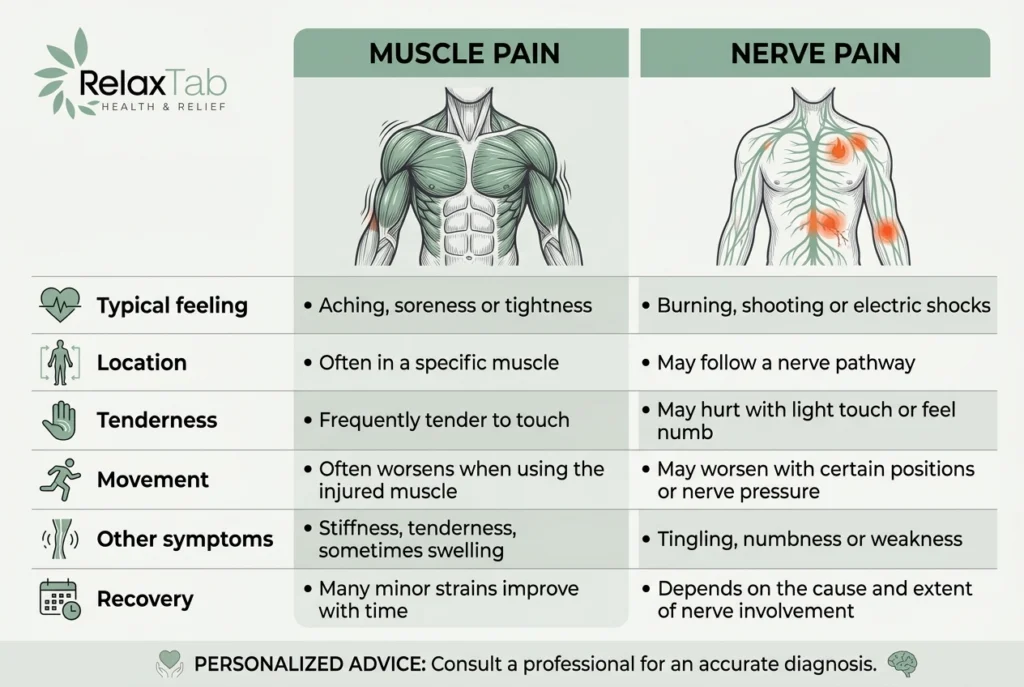
Muscle Pain vs Nerve Pain: Key Differences
The difference between muscle pain and nerve pain is often clearer when you compare the sensation, location and accompanying symptoms.
| Feature | Muscle pain | Nerve pain |
| Typical feeling | Aching, soreness or tightness | Burning, shooting or electric shocks |
| Location | Often in a specific muscle | May follow a nerve pathway |
| Tenderness | Frequently tender to touch | May hurt with light touch or feel numb |
| Movement | Often worsens when using the injured muscle | May worsen with certain positions or nerve pressure |
| Other symptoms | Stiffness, tenderness, sometimes swelling | Tingling, numbness or weakness |
| Common causes | Overuse, strain or injury | Nerve compression, neuropathy or nerve damage |
| Recovery | Many minor strains improve with time | Depends on the cause and extent of nerve involvement |
These are general patterns, not definitive diagnostic rules. Nerve pain can feel achy, and muscle injuries can produce sharp pain. Both types can occur together.
How to Tell If Pain Is Muscle or Nerve
If you are wondering how to tell if pain is muscle or nerve, start by noticing how it feels, where it travels and what makes it worse.
1. Notice the type of pain
A dull ache, tightness or tenderness after physical activity may suggest muscle pain. Burning, tingling or electric shock-like sensations may indicate nerve involvement.
2. Check whether the pain travels
Pain that starts in the back or neck and travels into an arm or leg can suggest nerve irritation. Localised soreness after lifting or exercise may be more consistent with a muscle problem.
3. Look for sensory changes
Pins and needles, reduced sensation or unusual sensitivity to light touch are clues that a nerve may be involved.
Pinched Nerve vs Pulled Muscle
A pinched nerve happens when pressure or irritation affects a nerve. A pulled muscle, also called a muscle strain, occurs when muscle fibres are overstretched or torn.
For instance, a pulled back muscle may hurt when you bend or lift. A pinched nerve in the lower back may cause pain that travels into the leg, sometimes alongside numbness or weakness.
A healthcare professional can distinguish between these conditions using your medical history, a physical examination and, when necessary, further tests.
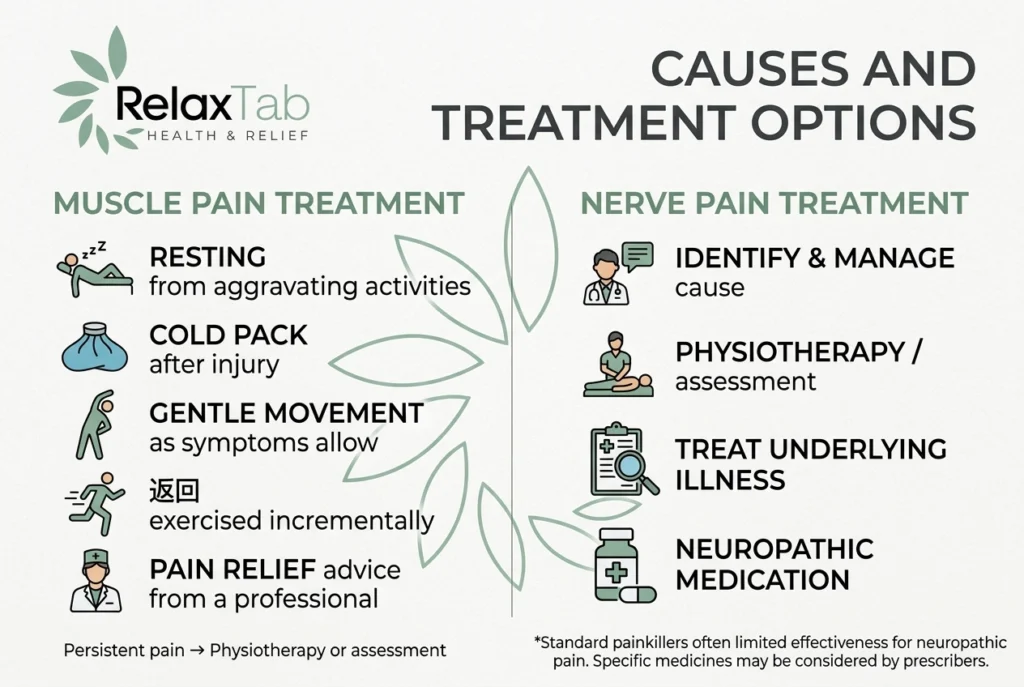
Causes and Treatment Options
Treatment for muscle pain and nerve pain differs because each can have a different underlying cause.
Muscle pain treatment
For mild muscle soreness or a minor strain, useful measures may include:
- Resting from activities that aggravate the injury.
- Applying a wrapped cold pack after a recent injury.
- Using gentle movement as symptoms allow.
- Returning to exercise gradually.
- Asking a pharmacist or clinician about appropriate pain relief.
Persistent or recurring pain may require physiotherapy or further assessment.
Nerve pain treatment
Nerve pain treatment focuses on identifying and managing the cause. Depending on the condition, a clinician may recommend physiotherapy, treatment for an underlying illness or medication specifically used for neuropathic pain.
The NHS explains that standard painkillers, such as paracetamol and ibuprofen, often do not work well for neuropathic pain. Medicines such as amitriptyline, duloxetine, gabapentin or pregabalin may be considered by a prescriber when appropriate.
For more general information, explore the Relax Tab Pain Relief category.
Best practices for managing pain
To support recovery and reduce the risk of aggravating symptoms:
- Record when the pain starts, where it occurs and how long it lasts.
- Avoid pushing through severe or worsening pain.
- Maintain gentle activity when appropriate rather than prolonged bed rest.
- Follow medical advice and take medicines only as directed.
- Arrange an assessment if symptoms persist, return frequently or affect everyday activities.
There is no single treatment that works for every type of pain.
When to See a Doctor for Nerve Pain
You should contact your GP if you experience persistent burning pain, repeated tingling, unexplained numbness or changes in muscle strength. Early assessment can help identify treatable causes and reduce the risk of complications.
Warning signs that need urgent attention
Seek emergency medical care if you develop:
- Sudden or rapidly worsening muscle weakness.
- New numbness around the genitals, buttocks or inner thighs.
- New difficulty passing urine, inability to urinate or loss of bladder or bowel control, particularly alongside back pain.
- Sudden weakness on one side of the body, facial drooping or difficulty speaking.
These symptoms can indicate serious conditions that require immediate assessment. Do not wait for them to improve on their own.
If you experience severe muscle pain with marked swelling, significant weakness or dark, tea-coloured urine, seek urgent medical assessment as well.
For further guidance, read the NHS information on peripheral neuropathy.
Pain Relief Medicines and Their Uses
The most suitable medicine depends on the type of pain, its cause, your medical history and any other medicines you take.
What are tapentadol tablets used for?
Tapentadol is a strong opioid analgesic prescribed for certain types of moderate to severe pain when a clinician considers it appropriate. It acts on the central nervous system to reduce pain signals.
It is not a routine first-line treatment for every muscle ache or nerve pain condition. It can cause drowsiness, constipation, dependence and potentially life-threatening breathing problems.
For information about the product listed by Relax Tab, see Tapentadol (Aspadol) 200 mg tablets. This product information is not a recommendation to use tapentadol for undiagnosed pain. Use it only under appropriate medical supervision and according to the prescription and product guidance.
What are temazepam tablets used for?
Temazepam is a benzodiazepine medicine used for the short-term treatment of severe sleeping difficulties in appropriate circumstances. It is not a treatment for muscle pain or nerve damage.
Although pain can interfere with sleep, taking a sedative does not address the underlying cause of the pain. Temazepam can cause sedation, dependence and withdrawal problems.
Combining temazepam with tapentadol or other opioids can cause profound sedation and dangerously slow breathing. Do not combine these medicines unless a qualified prescriber has specifically assessed and directed their use.
You can read the product information for Temazepam 20 mg tablets, but consult a healthcare professional before using prescription medicines.
Does pain relief have to be expensive?
The cost of pain treatment varies according to the diagnosis, prescribed treatment, duration of care and whether you need physiotherapy or specialist assessment. There is no universal cost for treating muscle pain or nerve pain.
A pharmacist or healthcare professional can help you understand suitable options, expected costs and whether further investigation is needed. Choosing the cheapest medicine without identifying the cause may delay appropriate treatment.
How Sleep and Stress Can Affect Pain
Pain does not always occur in isolation. Poor sleep, stress and muscle tension can affect how discomfort feels and how well you cope with it.
If your pain is affecting your rest, explore these related Relax Tab resources:
- Back Pain at Night — understand possible reasons for nighttime back discomfort.
- Migraine vs Headache — learn how common headaches differ from migraines.
- How Stress Affects Your Body and Sleep — discover how stress can influence sleep and physical tension.
These resources provide general educational information and do not replace an individual medical assessment.
Conclusion
Understanding muscle pain vs nerve pain starts with recognising the difference between localised muscle soreness and symptoms such as burning, tingling, numbness or pain that travels along a limb. These patterns can offer useful clues, but only an appropriate clinical assessment can establish the cause.
For mild muscle soreness, rest from aggravating activities and gentle movement may help. Persistent nerve symptoms, worsening pain or unexplained weakness need medical attention, while serious neurological warning signs require emergency care.
At Relax Tab, our aim is to help readers understand pain, explore relevant health information and make informed decisions. Always seek advice from a qualified healthcare professional before starting, stopping or changing medication.
Frequently Asked Questions
A: Yes. A person can have muscle pain and nerve pain at the same time. For example, a back problem may irritate a nerve while causing nearby muscles to tighten. A clinician can help identify the different sources of pain and recommend appropriate treatment.
A: Sometimes. Nerve irritation caused by temporary pressure may improve when the pressure resolves. However, pain associated with diabetes, significant nerve injury or other underlying conditions may persist. Seek medical advice if symptoms continue, worsen or include weakness or numbness.
A: No. Burning pain can occur with nerve problems, but it can also result from skin conditions, inflammation and other causes. The sensation alone cannot establish a diagnosis. Persistent or unexplained burning pain should be assessed by a healthcare professional.
A: Yes. Both can cause pain, tightness and restricted movement. A pinched nerve is more likely to produce radiating pain, tingling, numbness or weakness, although these symptoms are not present in every case.
A: Neither is always worse. A severe muscle injury can be extremely painful, while nerve pain can cause persistent burning, shooting sensations or sensitivity to touch. The severity depends on the underlying cause and individual experience.
A: Yes. Stress can contribute to muscle tension, particularly around the neck, shoulders and back. However, persistent pain should not automatically be attributed to stress, especially if it occurs alongside numbness, weakness or other unusual symptoms.
A: Arrange a GP appointment for persistent tingling, burning pain, unexplained numbness or weakness. Seek emergency care for new bladder or bowel problems with back pain, saddle-area numbness or sudden neurological symptoms.
A: No. Tapentadol is a prescription opioid used for selected pain conditions. It is not appropriate for every type of muscle or nerve pain and carries important risks, including dependence and respiratory depression. A qualified prescriber must determine whether it is suitable.
A: No. Temazepam is a sedative used for short-term treatment of severe sleeping difficulties in appropriate patients. It does not treat the underlying cause of muscle pain or nerve damage.