
Blog
Can Lack of Sleep Make Anxiety Worse? Causes & Tips

Have you ever had a poor night’s sleep and felt unusually worried, irritable or overwhelmed the next day? You’re not alone. Sleep and mental wellbeing are closely connected, and even one night of disrupted sleep can make everyday stress feel harder to manage.
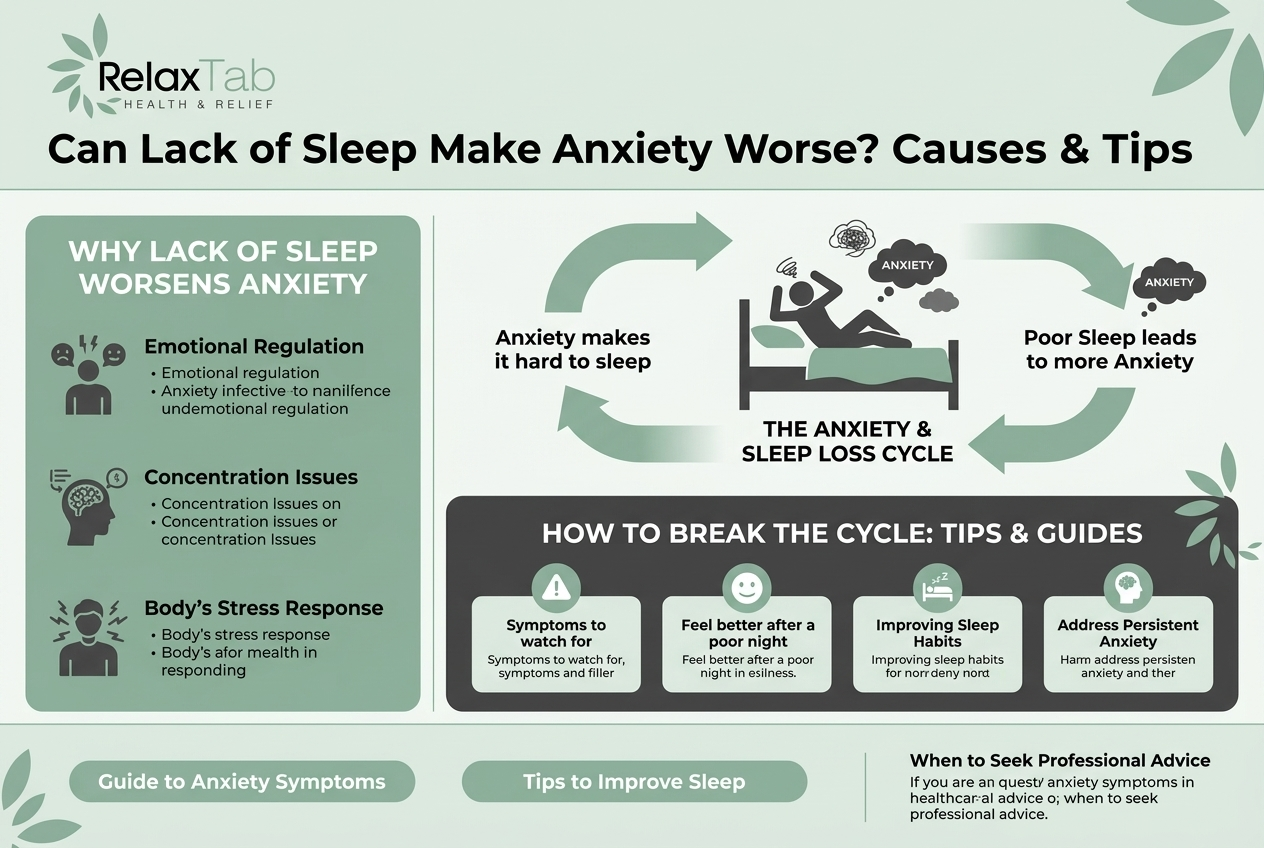
Yes, lack of sleep can make anxiety worse. Sleep deprivation can affect emotional regulation, concentration and the body’s response to stress. Anxiety can also make it harder to fall asleep or stay asleep, creating a cycle that becomes difficult to break. The good news is that improving your sleep habits and addressing persistent anxiety can help you regain a healthier routine.
In this guide, Relax Tab explains why sleep deprivation can increase anxiety, which symptoms to look out for, how to feel better after a poor night’s sleep and when to seek professional advice.
What Is the Link Between Lack of Sleep and Anxiety?
The relationship between sleep and anxiety works in both directions. Poor sleep can increase emotional sensitivity and stress, while anxiety can keep your mind active when you are trying to rest.
Sleep helps the brain process emotions, maintain attention and recover from daily demands. When you do not get enough restorative sleep, situations that normally feel manageable may seem more stressful.
According to research published in Sleep Medicine Reviews, sleep disturbances and anxiety symptoms are closely associated. This relationship does not mean that every person with poor sleep will develop an anxiety disorder, but it highlights why consistent rest matters for mental wellbeing.
If you want to understand the other side of this relationship, read Relax Tab’s guide to can anxiety affect sleep?.
Why Does Lack of Sleep Make You Anxious?
Sleep deprivation can affect several processes involved in emotional balance and stress management.
1. It makes emotional regulation harder
Sleep supports the brain regions responsible for managing emotions. When you are tired, you may react more strongly to everyday problems, criticism or uncertainty.
A small concern can feel overwhelming simply because your brain has fewer resources available to manage it.
2. It increases your sensitivity to stress
After inadequate sleep, ordinary challenges may feel more demanding. You might become impatient, worry about minor mistakes or struggle to cope with unexpected changes.
Stress hormones, including cortisol, follow a natural daily rhythm. Sleep disruption can affect this system, although the response varies between individuals.
3. It affects concentration
Poor sleep can make it harder to focus, remember information and make decisions. You may then worry about your performance at work, studies or home.
This additional worry can make it even more difficult to relax at bedtime.
4. It can increase physical discomfort
Tiredness may occur alongside muscle tension, headaches, a racing heartbeat or a general feeling of restlessness. These sensations can sometimes resemble anxiety symptoms and make existing worries feel more intense.
For more information, explore what is anxiety?.
Sleep Deprivation Anxiety Symptoms
Sleep deprivation anxiety symptoms can affect your thoughts, emotions and body. They vary from person to person and may overlap with symptoms of other health conditions.
| Type | Common symptoms |
| Emotional | Irritability, nervousness and feeling overwhelmed |
| Mental | Racing thoughts, poor concentration and excessive worrying |
| Physical | Muscle tension, tiredness and a pounding heartbeat |
| Sleep-related | Difficulty falling asleep, waking frequently or feeling unrefreshed |
| Behavioural | Avoiding stressful tasks or struggling with daily responsibilities |
Experiencing these symptoms after a poor night’s sleep does not automatically mean you have an anxiety disorder. However, persistent or severe symptoms deserve professional assessment.
Can Lack of Sleep Cause Panic Attacks?
Sleep deprivation may increase vulnerability to panic symptoms, but it does not mean that a panic attack will inevitably occur. Insufficient sleep can increase stress sensitivity and make physical sensations feel more alarming, particularly for people who already experience panic or anxiety.
A panic attack can involve a sudden wave of intense fear, a racing heart, sweating, trembling, breathlessness or dizziness. These symptoms can be frightening, especially when they happen unexpectedly.
If you experience recurring panic attacks, speak to your GP to discuss possible causes and appropriate treatment. Do not assume that sleep deprivation is the only explanation, particularly if the symptoms are new or severe.
Seek urgent medical help for severe or new chest pain, significant breathing difficulties or symptoms that could indicate another medical emergency.
Understanding the Anxiety and Sleep Cycle
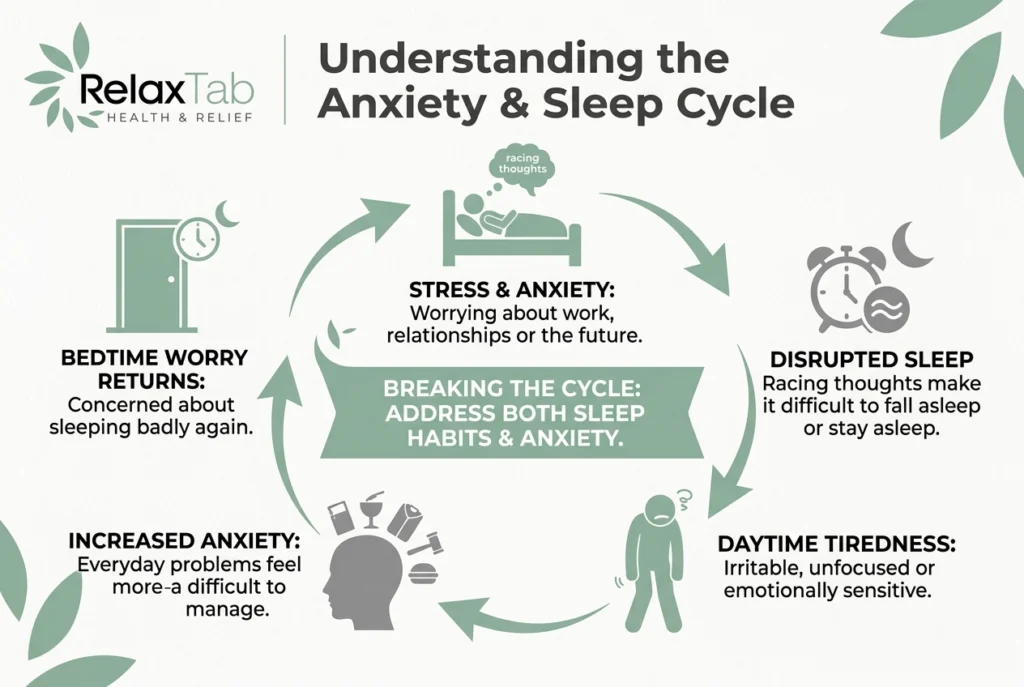
The anxiety and sleep cycle can become self-reinforcing. Worry makes it difficult to sleep, and the resulting tiredness can make the next day’s worries feel harder to manage.
Here is how the cycle often develops:
- Stress or anxiety: You go to bed worrying about work, relationships or the future.
- Disrupted sleep: Racing thoughts make it difficult to fall asleep or stay asleep.
- Daytime tiredness: You feel irritable, unfocused or emotionally sensitive.
- Increased anxiety: Everyday problems feel more difficult to manage.
- Bedtime worry returns: You become concerned about sleeping badly again.
Breaking this cycle often requires addressing both sleep habits and anxiety rather than focusing on just one.
Relax Tab’s guides to how stress affects your body and sleep and why you can’t fall asleep at night provide further information about these related problems.
How to Reduce Anxiety After a Bad Night’s Sleep
You cannot always recover from poor sleep immediately, but a few practical steps can help you manage the day more comfortably.
1. Get natural daylight in the morning
Spend some time outdoors after waking, if possible. Morning daylight helps regulate your body clock and supports a more consistent sleep-wake rhythm.
2. Limit caffeine
Coffee, tea, energy drinks and other caffeinated products can increase jitteriness and interfere with sleep. If you are already feeling anxious, consider reducing your intake and avoiding caffeine later in the day.
3. Try slow, comfortable breathing
Sit somewhere quiet and breathe gently, allowing your exhalation to be slightly longer than your inhalation if comfortable. Continue for a few minutes without forcing deep breaths.
This may help you settle in the moment, although it is not a substitute for treatment when anxiety is persistent.
4. Keep your usual wake-up time
Sleeping much later than usual or taking a long late-afternoon nap can make it harder to sleep that night. Try to maintain a reasonably consistent wake-up time, even after a difficult night.
If you need to nap, keep it short and avoid napping late in the day.
5. Lower the pressure to sleep perfectly
Worrying about the consequences of one poor night can make the following night more stressful. Remind yourself that occasional sleep disruption happens and that one difficult night does not determine your long-term health.
6. Follow a relaxing evening routine
Reduce stimulating activities before bed, keep your bedroom comfortable and choose a calming activity such as reading or listening to quiet audio.
For more practical suggestions, see Relax Tab’s guide to sleep hygiene tips.
7. Consider professional support
If anxiety or sleep problems keep returning, speak to your GP. Cognitive behavioural therapy (CBT) can help with anxiety, while cognitive behavioural therapy for insomnia (CBT-I) is a recognised treatment for persistent insomnia.
You do not have to wait until sleep problems become severe before asking for help.
What About Sleep and Anxiety Medicines?
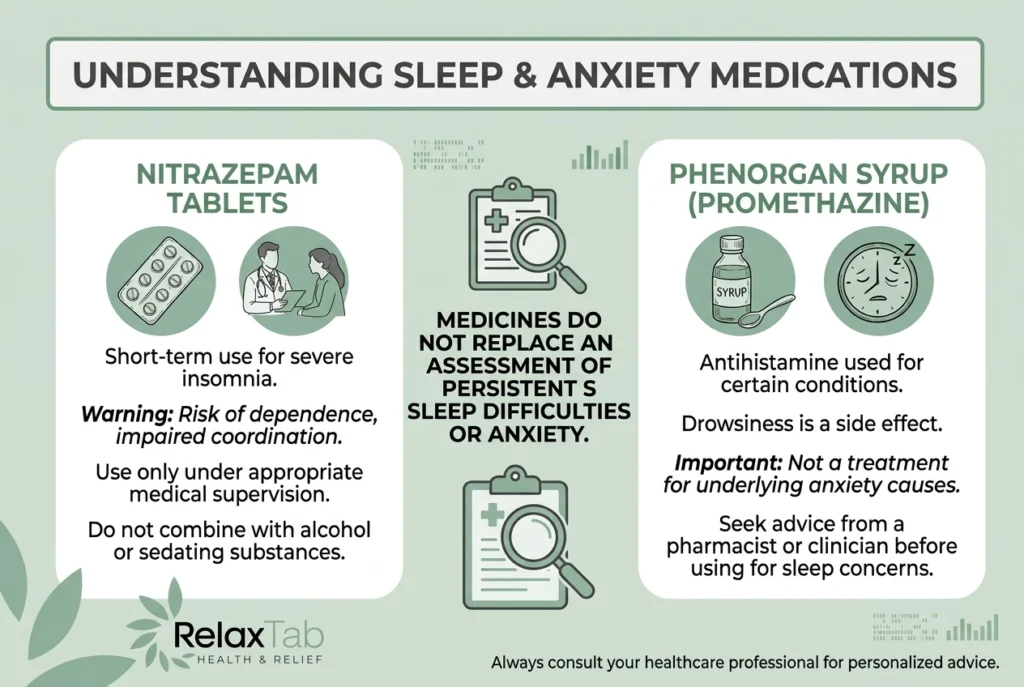
Medicines may be appropriate for certain sleep or anxiety conditions, but the right choice depends on your symptoms, medical history and other medicines you take. They should not replace an assessment of persistent sleep difficulties or anxiety.
Nitrazepam tablets
Nitrazepam is a benzodiazepine used in specific circumstances for short-term treatment of severe insomnia. It can cause drowsiness, impaired coordination and dependence, and it is not suitable for everyone.
It should only be used under appropriate medical supervision and according to the prescriber’s instructions. Do not take someone else’s medication or combine it with alcohol or other sedating substances.
For general product information, see Relax Tab’s nitrazepam 10 mg tablet page.
Phenergan syrup
Phenergan syrup contains promethazine, an antihistamine that can cause drowsiness. Depending on the product and the person’s circumstances, promethazine may be used for certain conditions, but it is not a treatment for the underlying causes of anxiety.
Drowsiness does not necessarily mean that sleep quality or anxiety will improve. Check the product information and seek advice from a pharmacist or clinician before using it for a sleep-related concern.
You can read the available information on Phenergan syrup 100 ml.
Important: Do not start, stop or combine medicines to manage anxiety or sleep problems without appropriate professional advice. In the UK, nitrazepam is a prescription-only controlled medicine. Always check the legal status, suitability and supply requirements of any medicine with a qualified UK healthcare professional.
Benefits of Improving Sleep Quality
Consistent, restorative sleep supports several aspects of everyday wellbeing.
Potential benefits include:
- Better emotional regulation and stress management.
- Improved concentration, memory and decision-making.
- Less daytime irritability and fatigue.
- A more consistent sleep-wake rhythm.
- Greater ability to cope with everyday challenges.
Better sleep may help reduce anxiety symptoms, but it is not a guaranteed cure for an anxiety disorder. Some people need psychological therapy, medical assessment or a combination of treatments.
Best Practices for Better Sleep
A realistic routine is often more useful than trying to change everything at once.
| Best practice | How it helps |
| Maintain regular sleep and wake times | Supports your body clock |
| Keep your bedroom dark, quiet and comfortable | Reduces environmental disruption |
| Avoid caffeine close to bedtime | Limits stimulation that can delay sleep |
| Wind down before bed | Helps create a calmer transition to sleep |
| Exercise regularly | Supports general wellbeing and sleep quality |
| Seek help for persistent anxiety | Addresses problems that sleep habits alone may not resolve |
If sleep difficulties occur at least three nights a week, continue for around three months and affect your daytime functioning, speak to a healthcare professional about possible insomnia. Seek advice sooner if symptoms are severe or affecting your ability to manage daily life.
For trusted guidance, consult the NHS advice on insomnia and the NHS guide to generalised anxiety disorder (GAD).
Conclusion
So, can lack of sleep make anxiety worse? Yes. Poor sleep can increase emotional sensitivity, make stress feel more difficult to manage and contribute to a cycle in which anxiety disrupts sleep and tiredness increases worry.
Start with manageable steps: keep a consistent routine, get morning daylight, limit late caffeine and make time to unwind. If sleep difficulties or anxiety continue, seek professional advice rather than relying on self-treatment.
At Relax Tab, our aim is to support informed decisions about sleep and wellbeing through accessible health information. Remember that better sleep can be an important part of managing anxiety, but persistent symptoms deserve appropriate care.
Frequently Asked Questions
A: Yes. One night of poor sleep can make you feel more nervous, irritable or emotionally sensitive the following day. These temporary feelings do not necessarily indicate an anxiety disorder. If anxiety persists, becomes severe or interferes with daily life, speak to your GP.
A: Improving sleep can reduce tiredness and may make anxiety easier to manage. However, sleep alone may not resolve an anxiety disorder. Persistent symptoms may require treatments such as CBT, other psychological support or medication prescribed by a qualified professional.
A: Tiredness can make emotional regulation and concentration more difficult. You may react more strongly to stress, overthink everyday situations or notice physical sensations more intensely. These effects can make existing worries feel more difficult to manage.
A: Sleep deprivation may increase vulnerability to panic symptoms, particularly in people who already experience anxiety. However, it is not the only possible cause. Recurring panic attacks should be discussed with a healthcare professional, and severe or new physical symptoms may need urgent assessment.
A: Most adults generally need around seven to nine hours of sleep per night, although individual needs vary. Sleep quality, regularity and daytime functioning also matter. Consistently feeling exhausted despite sufficient time in bed may warrant medical advice.
A: Some prescribed medicines may be used for specific anxiety or sleep conditions, but they have different benefits and risks. Sedating medicines can cause side effects or dependence. A GP or pharmacist can help you understand appropriate options based on your individual circumstances.
A: Phenergan syrup contains promethazine, which can cause drowsiness, but it does not treat the underlying cause of anxiety. Whether it is suitable depends on the circumstances and product guidance. Ask a pharmacist or clinician before using it for a sleep-related concern.
A: Speak to your GP if sleep problems or anxiety persist, regularly affect your daily activities or are becoming harder to manage. Seek urgent help if you feel unable to keep yourself safe or experience symptoms that may indicate a medical emergency.